How and Where Retailers Can Ship Alcohol Direct-to-Consumer
While direct-to-consumer (DtC) shipping was thrown into the spotlight by the COVID-19 pandemic, the popularity of shipping alcohol directly to consumers has been growing for some time. For wineries, DtC shipping is a $3.7 billion dollar industry. But for years, retailers have not been able to enjoy the same successes from this growing market.
The map of where retailers are allowed to ship DtC is much smaller than it is for wineries. But as DtC shipping grows in popularity retailers are starting to take more advantage of this channel and reach new customers, despite some of the added regulatory rules to comply with.
Here is what you need to know to consider shipping DtC as an off-premise retailer.
Where you can ship direct-to-consumer as a retailer
Currently, 12 states and the District of Columbia permit out-of-state retailers to sell directly to their residents, and fulfill those orders through a common carrier. Ten of these states require the retailer to receive a license, two operate under a “reciprocal” process, where only retailers located in those reciprocal states can ship to each other’s residents, and only Florida doesn't require a specific license. Except for selling to residents of these 13 states and D.C., it is illegal for a retailer to deliver beverage alcohol into any state in which it does not have a licensed retail operation.
Licensed retailer DtC states
If a retailer receives a DtC license, they may sell out-of-state directly to customers in Oregon, Wyoming, Nebraska, North Dakota, Louisiana, West Virginia, Virginia, New Hampshire, Florida, Connecticut, California and the District of Columbia. However, there are some unique situations:
- Florida and D.C. do not require an actual DtC license, but do have a set of DtC compliance rules that must be followed.

Reciprocal retailer DtC states
Beyond the 10 “license” states and D.C., there are currently two states that operate under what is known as reciprocity rules. These states are California and New Mexico, which permit shipments of wine only.
These two reciprocity states allow out-of-state retailers to sell directly to their residents only if those out-of-state retailers are located in a state that allows out-of-state retailers to sell directly to their residents without any licensing, tax or other regulatory burdens. Put more simply, the rules in state B must be as free and open for retailer DtC sales as the rules in state A for a retailer shipping from state B to sell to a resident of state A. They may also require a specific letter of agreement between the two states, indicating that there are no license or tax requirements. Currently, only California and New Mexico have such an agreement.
State rules for retailers shipping DtC
Wyoming, Louisiana, Connecticut, Florida and West Virginia permit the DtC sale of wine only for retailers. Nebraska, North Dakota, D.C. and New Hampshire permit the DtC sale of all types of beverage alcohol. Virginia permits the DtC sale of beer and wine, as does Oregon. However, Oregon only allows beer to come from states that themselves permit DtC shipping of beer.
Some other state considerations to be aware of include:
- West Virginia and New Hampshire have “dry” communities where it is illegal to sell alcohol in any manner, including DtC.
- West Virginia and Virginia will require a DtC seller to indicate to the alcohol control boards which labels will be sold via DtC.
- Virginia requires a retailer to post that they have permission from the manufacturer to resell their products through DtC, and also prohibits DtC sellers from using third-party marketing to advertise their DtC shipping option.
Packaging
When alcohol is being delivered direct-to-consumer, it must be shipped in a properly labeled package indicating it contains alcohol and an adult’s signature is required for delivery to be made. Carriers experienced with the DtC market (USPS is prohibited by federal law from accepting any packages containing alcohol) are aware of these rules and will collect signatures. These carriers will also ensure retailers have valid DtC licenses before agreeing to ship their packages. When choosing a carrier to use, a retailer should make sure that they have a well-thought out and developed alcohol program and clearly commit to fulfilling their regulatory requirements.
Tax and compliance for DtC retailers
Retailers must also follow specific tax rules. Every state that allows retailer DtC shipping, D.C., require the seller (i.e., the retailer) to collect and remit both excise taxes and sales taxes for the state they ship into. Most states also require a regular report from the retailer detailing the DtC sales they have made, though this is often coupled with an excise tax return.
While retailers should already have a handle on managing sales taxes for sales made at their licensed premises, once they begin engaging with DtC shipping they will be faced with a much bigger burden handling sales taxes in all the states they ship into. This can get complicated, because the correct sales tax rate is based on the customer’s exact deliver-to address, which can be some combination of state, county, city, and special district rates. Some states do make it easy by having a single state-wide sales tax rate, but there are places where the tax rate can be different depending on what side of the street a shipment goes to.
This can make the process of collecting and remitting tax very difficult depending on the state. Tax returns that are still reliant on paper forms or more manual filings processes can also make things difficult for a retailer now dealing with tax policies in several states at once. More states are moving toward simplified online filings, but properly collecting and remitting sales tax remains a major burden for DtC alcohol shippers.

Excise taxes
For retailers, excise tax obligations represent a novel challenge that, unlike sales taxes, many retailers may not have much experience with. This is because while excise taxes are ubiquitous in alcohol sales, they are typically handled by the distributor or possibly supplier in a three-tier sale, and therefore have been handled by the time any alcohol gets to a retailer. However, because shipping alcohol DtC into a state eliminates the parties who would normally remit the state’s excise tax, states require all DtC shippers to directly pay the excise tax due on their shipments.
Unlike sales taxes, excise taxes are fairly straightforward. They are based on the total volume of product shipped into a state, and while the rates can vary state to state, there is only one rate for a single product type or ABV range in a state. Typically, the rates are lowest for beer and cider—maybe 20 cents per gallon—and highest for spirits, with wine rates generally in the middle. One major difference for excise tax from sales tax is that the retailer may not collect the amount of excise tax due from the consumer at the time of purchase like they can with sales tax. Instead, the excise tax is supposed to be built into the listed purchasing price of the alcohol sold.
While excise taxes are in some ways a relatively simple aspect of the compliance burden for DtC shippers, they present a unique complication for retailers engaged in DtC shipping.
Filing a remittance is generally simple, only requiring the shipper to catalog total shipments made and calculate the tax due based on the products shipped. An excise tax return can be made more complicated if the return is required to be accompanied by a shipping report, for which the shipper must provide a detailed list of all shipments made during the reporting period, including date of delivery, name and address of recipient, and products shipped.
While excise taxes are in some ways a relatively simple aspect of the compliance burden for DtC shippers, they present a unique complication for retailers engaged in DtC shipping. This is because all alcohol sold by retailers has already had their state’s excise tax assessed and remitted against it. Retailers are required to purchase the alcohol they resell within their state’s three-tier market, meaning that it came from a local distributor (or from a self-distributing manufacturer where allowed) who was already obligated to pay the local excise tax for that alcohol. But if the retailer then resells that alcohol DtC into a different state, they would be obligated to remit the excise tax of that other state as well.
For example, if a California retailer ships a wine DtC to a consumer in Illinois, that wine would have already had a 20-cent per gallon tax remitted to California (paid by the distributor or winery the retailer received the wine from) and then would also be subject to the $1.39 per gallon excise tax in Illinois, to be paid by the retailer. As such, this creates a double-taxation scenario where alcohol shipped by retailers DtC is ultimately subject to more tax than alcohol shipped DtC by the manufacturer (who can sell alcohol that has not already been tax-paid in their home state). Requiring DtC shippers to remit the ship-to state’s excise tax does make policy sense, to create parity with other sales in that state and ensure the state keeps its coffers full, but the extra burden on retailers engaged in DtC shipping remains a point of contention, though perhaps it may just be the price paid by retailers to engage in this market.

Will DtC shipping for retailers expand in the future?
While there is a lot of interest among retailers and consumers for DtC shipping opportunities, the map for retailer DtC shipping map is a lot smaller than it is for other entities, particularly wineries. Part of the reason for this is the perception of unfair advantages that a remote retailer might have over local retailers, which leads to demands for laws restricting “foreign” competition. There is also concern among regulators that they lack the jurisdiction to properly monitor and control retailers located in other states. However, the general success of retailer shipping in the states that do allow it would seem to belie these concerns.
Another issue currently facing the retailer DtC shipping market is the lack of a national policy on whether states can extend discriminatory permissions for local retailers to do DtC shipping, while blocking that permission for remote retailers. The 2005 Supreme Court case Granholm v. Heald established the modern jurisprudence around DtC shipping of alcohol, primarily that states could not allow local shipping of wine while prohibiting it from out-of-state sources. However, that case only mentioned producers (wineries, really, but it has become accepted that the principles would also apply to breweries and distilleries) and it left open the question of retailers. There have been efforts over the years to extend Granholm to retailers, but they have been unsuccessful so far and even faced increasing pushback in just the last year or two.
Nevertheless, if the number of states that allow out-of-state retailer DtC shipping were to expand, there would be great benefit for consumers. There are a number of retailer DtC myths saying that out-of-state retailer DtC permissions would harm local retailers and that states would miss out on the tax revenue. This is untrue, as evidence shows that where allowed to ship DtC, retailers are active in complying with regulatory requirements, including getting licensed and protecting against sales to minors. Those states that allow retailer DtC shipping have earned additional tax revenue they otherwise would not have and they continue to have thriving local retailer markets.

The fact is that shipping of alcohol entails a lot of additional costs, particularly when it comes to the time and fees for shipping, that do not exist with local retailer sales. As such, DtC shipping by retailers largely focuses on purchases of specialty or unique wines that are not distributed in the destination state. The key example is the Nebraska consumer looking for a specialty imported wine that is sold only by one or two select New York retailers who have access to the importer; there is not enough demand in Nebraska (or most states) for a local distributor to pick up that wine, and therefore it is otherwise unavailable to the Nebraska consumer. (While many states do offer “special order” options, that is a long and complicated process that depends on finding a local distributor willing to take the time and effort to manage a single sale.) This is a very different scenario than the sale of a $20 bottle of widely distributed wine, for which any consumer is going to rely on their local wine shop for a purchase.
Hopefully, as DtC shipping continues to grow, more states will see the benefits of retailer DtC shipping and pass legislation that allows consumers to purchase beverage alcohol products they normally wouldn’t have access to.

Learn how Sovos ShipCompliant can help you manage your taxes and compliance for DtC shipping as a retailer.
Talk to an expertSubscribe to our Newsletter
Get monthly updates on Sovos ShipCompliant resources, data reports, fresh resources and more.
Subscribe nowWhite Paper: A Guide to Direct-to-Consumer Taxes for Brewers and Distillers
Get the whitepaper
Brewers and distillers entering the direct-to-consumer (DtC) shipping channel face numerous regulatory requirements, including a variety of tax implications. In fact, taxes on DtC shipments present a special challenge, as they require the shipper to recognize and manage a broader tax burden than if they were selling only through a state’s three-tier system. This extends to both a state’s excise taxes, based on the volume of sales made, and a state’s sales taxes, based on the value of sales made.
This free white paper takes a look at what those obligations are and how breweries and spirits producers can navigate them. Topics discussed include:
- Sales tax rules for shipping beer and spirits direct-to-consumer
- Excise tax requirements
- Some unique tax scenarios for DtC alcohol shippers
Staying on top of tax obligations is critical to remaining in compliance when shipping alcohol to consumers across state lines, thus avoiding the risk of fines and other penalties.
Download your free copy of this white paper today for an expert overview of these essential tax topics for DtC beer and spirits shippers.
Subscribe to our Newsletter
Get monthly updates on Sovos ShipCompliant resources, data reports, fresh resources and more.
Subscribe now
Navigate the 2026 DtC Wine Market with Unparalleled Insight
The 2026 Direct-to-Consumer Wine Shipping Report is your essential resource for navigating today’s rapidly changing market. This annual analysis offers exclusive, data-driven insights from the industry’s most comprehensive DtC wine shipment database.
Inside this year's comprehensive analysis:
- Unparalleled Market Benchmarks: Access exclusive data from the industry’s most comprehensive analysis of DtC wine shipments.
- Master Structural Headwinds: Strategies and context needed to navigate current uncertainty and industry shifts.
- Prepare for a Stronger 2026: Actionable takeaways designed to equip your business for growth in the coming year.
Download Your Free Copy
Join thousands of wine industry leaders who rely on this annual report to shape their business strategies.
Unpacking the Biggest Trends in DtC Wine Shipping
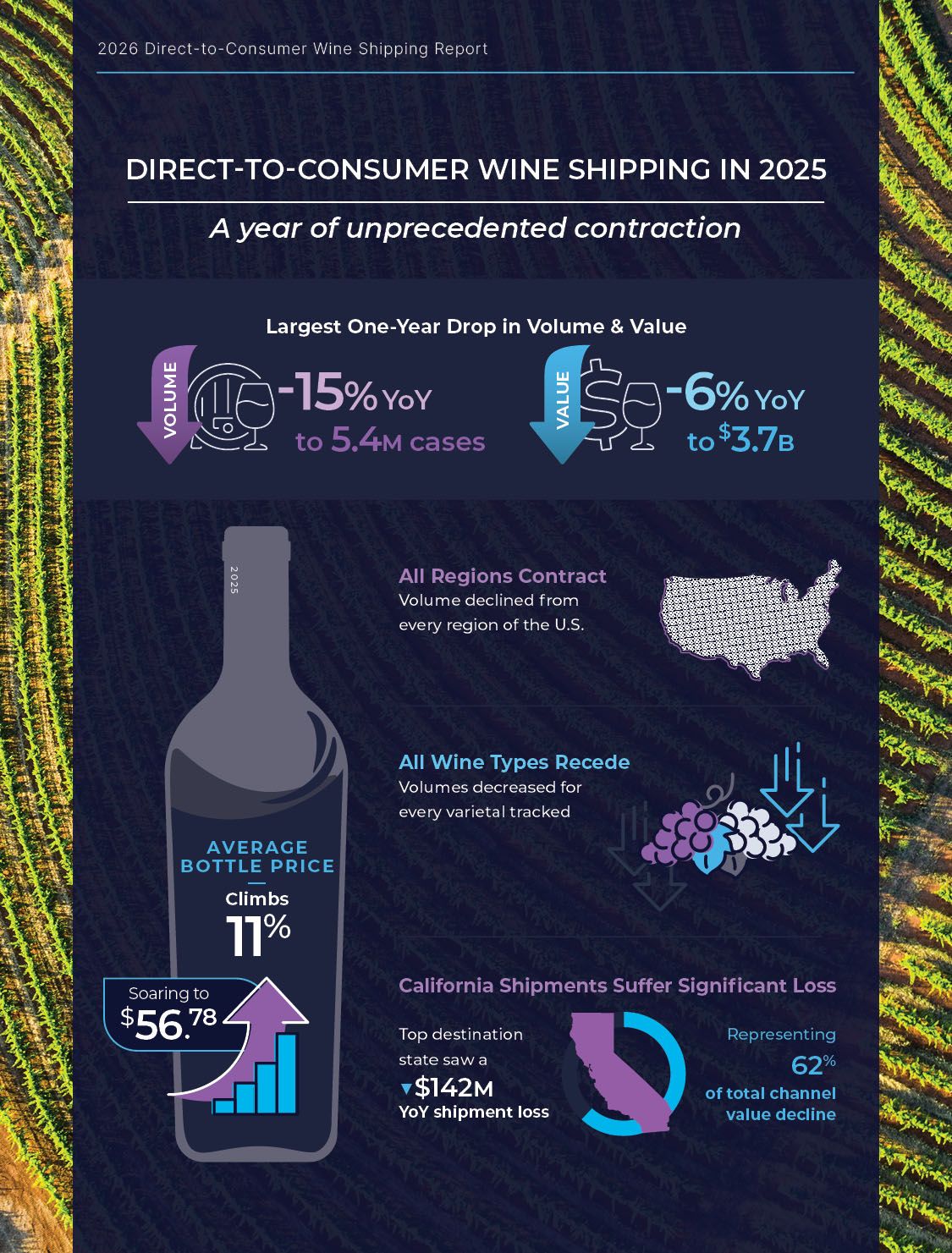
What’s Inside the 2026 DtC Wine Shipping Report?

Channel‑Wide Performance Trends
- Gain a clear view of overall market volume, value, and price dynamics, and how mix‑shift, rather than traditional “premiumization,” is redefining the DtC landscape.
Regional Insights
- Explore how each region performed, from Napa’s relative steadiness to Sonoma’s sharper‑than‑average value declines.
Seasonality & Month‑by‑Month Patterns
- Identify which times of year deliver peak shipment activity to better inform club planning, promotional calendars, and resource allocation.
Navigate Change with Confidence — Actionable Insights to Guide Your DtC Strategy

The DtC wine market is evolving. Whether you’re a winery building your DtC channel or an industry professional aiming to ugrasp the big picture, this report provides the insights you need to:
- Understand how economic pressures and shifting behaviors are reshaping demand across price tiers and regions.
- Discover trends in price inflation and consumer spending to make more informed decisions about your pricing approach.
- Explore regional, seasonal, and varietal trends to better align offerings with customer demand.
About the 2026 Direct-to-Consumer Wine Shipping Report
For more than 15 years, Sovos ShipCompliant has partnered with WineBusiness Analytics to provide the wine industry’s most trusted insights. Using anonymized data from over 1,300 wineries, 27 million transactions, and advanced statistical modeling by WineBusiness Analytics, this report ensures unparalleled accuracy and industry relevance. Data is meticulously validated and analyzed to provide a holistic view of the DtC market, representing >99% of U.S. wineries.
Subscribe to our Newsletter
Get monthly updates on Sovos ShipCompliant resources, data reports, fresh resources and more.
Subscribe nowInfographic: 4 Essential Traits to Look for in Your Compliance Partner
Subscribe to our Newsletter
Get monthly updates on Sovos ShipCompliant resources, data reports, fresh resources and more.
Subscribe nowInfographic: Address Validation for DtC Shippers
Subscribe to our Newsletter
Get monthly updates on Sovos ShipCompliant resources, data reports, fresh resources and more.
Subscribe nowDtC Wine Shipping ROI Tools
An interactive ROI calculator and map that enable informed decision-making about entering new direct-to-consumer wine shipping markets
Just getting started with direct-to-consumer wine shipping? Looking for additional, new markets to ship to? If you’re trying to determine whether a state is worth the investment, these ROI tools — a handy map and an interactive calculator — can help.
These tools will help you identify the most profitable new destination shipping states for your DtC wine business—and we’re always happy to help as well. Request a demo today to see how Sovos ShipCompliant solutions can streamline your direct-to-consumer compliance, tax, filing and reporting needs.
Map
Our direct-to-consumer ROI map displays key information that direct shippers will want to evaluate for each state in which direct-to-consumer wine shipping is permitted:
- Ease of getting started, a rating based on criteria including number of forms to be completed, paper versus electronic submission access, any bond requirements, degree of requirements for corporate officer information, background checks, and other factors
- License type required
- License fee
- Direct-to-consumer shipping volume rank for the previous calendar year, as reported in the annual Direct-to-Consumer Wine Shipping Report
*All information and data as of January 2026
ROI Calculator
Use our interactive direct-to-consumer ROI calculator to help you determine which states you should enter first. This tool allows you to select a state you have under consideration to identify the number of orders required to break even against the costs of licenses, tax and report generation costs.

Request a demo
Looking for even more resources for direct-to-consumer wine shippers than these ROI tools? Check out our DtC Wine Shipping Compliance Rules page for a state-by-state breakdown of how to comply with each state's DtC wine shipping rules.
Subscribe to our Newsletter
Get monthly updates on Sovos ShipCompliant resources, data reports, fresh resources and more.
Subscribe nowGuide to Interstate Beer Distribution
Everything you need to know to know about expanding into new states
Foreward
For breweries looking to expand their beer distribution, there are numerous rules and requirements that need to be followed and failure to do so can get in the way of expanding your reach or even block you from getting in there at all. A clear understanding of what is allowed where, what isn’t, and what’s required of your business by state and federal regulators is essential to successful market expansion.
Brewers have a ton of regulations to abide by; it’s true when you set up your brewery and it’s true when you want to sell into a new state—the importance then is recognizing what that new state requires.
How did we get here, anyway?
The 21st Amendment set up a national system where each state can establish its own individual rules for the sale, production, transportation, and consumption of alcohol within their borders. This means that when you do any of these activities in a particular state, you have to follow that state’s laws—and they can enforce these rules on any business engaging in these activities within state lines.
For every state you distribute into, there’s a whole new set of laws that you need to follow, adding to the intricacy of interstate distribution. This is where a lot of breweries can get caught—assuming that what is allowed in their home state automatically translates into permissible activity in new states.
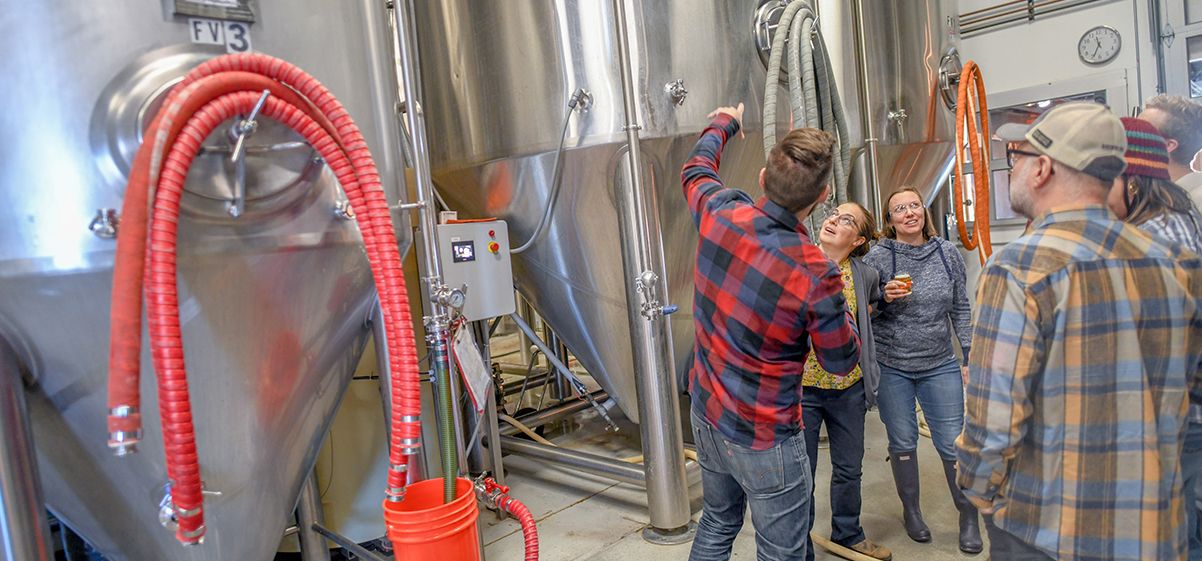
This is where a lot of breweries can get caught— assuming that what is allowed in their home state automatically translates into permissible activity in new states.
In-State and Out-of-State Beer Distribution Permissions
Selling beer in your home state
Over the last few decades, every state has adopted rules that enable easier sales for in-state breweries. These can include on-premise sales at tasting rooms or at your production facility, self-distribution to local retailers and restaurants, giving samples away at your tasting room, and selling beer to-go from your tasting room. But these permissions almost always only apply to local sales, sometimes limited to just within the county where you’re located. States rarely grant these permissions to out-of-state breweries. Instead, when you begin selling across state borders, your brewery will operate within that state’s three-tier system. In doing so, your brewery can benefit from the services and direct connections that distributors bring to the table.
Interstate beer distribution
Home state permissions, like self-distribution and giving away samples, are almost never available when distributing out-of-state. And this requirement to sell through the three-tier system even applies to incidental sales or attending events. For example, if you want to sell your beer at a festival in a different state, you may have to get a license, register your brands, and get them to the festival through an in-state beer distributor.
Varying State Laws
Similarities and differences among states’ laws
So when you’re selling into a new state, where do you look for the rules? Each state sets up its own alcohol rules, and each state has its own government organization that enforces these rules. These departments—like the California Alcoholic Beverage Control, the New York State Liquor Administration, or the Michigan Liquor Control Commission—are where you should look for the rules and compliance requirements.
On the one hand, there is plenty of commonality among states’ beer distribution rules. They follow a similar pattern, from set-up (licensing and product registration) to implementation (distribution and franchises) to follow-up (reporting and taxes). But no two states’ laws are exactly the same—so even if you have a handle on one state, you’ll still need to learn the particularities of each additional state you enter.
Licensing
Getting licensed
The first step to beer distribution for any state is to get licensed. You will need to show you have a TTB-issued Brewer’s Notice and a production license from your home state in order to get the beer distribution license.
Similarly, almost every state has a specific license that they require out-of-state beer suppliers to have before the supplier can distribute their beer in that state. So, for every state that you want to distribute in, you’ll need to get another separate license.
If you’re selling into a state without a license, that is a clear and obvious violation, and one that a state will enforce very strictly. And if you subsequently apply for the necessary license, you will need to report that violation, which that state would not take a friendly view of, likely souring your chances to get that license.
As such, it’s critical to understand all the licensing requirements before entering a new state. While getting an out-of-state supplier’s license is not the most complex process (at least compared to getting your Brewer’s Notice), it can still be difficult and time-consuming since it can require providing a state with a lot of personal and corporate information.
Licensing watch-outs
It’s crucial you make sure you’re getting the right license. Every state calls their supplier license something different, and it can be easy to accidentally use the wrong form or check the wrong box. Make sure to review the state rules and see what is the appropriate license for out-of-state businesses and what permits the sale of beer to in-state distributors.
Similarly, you may not see an available license. Alaska and D.C. do not require you to have a license to sell to local distributors—you still need to abide by their three-tier system, but you can engage with distributors without a license. Florida also does not mandate a specific license, though you still need to register with the state as the Primary American Source of your brand/labels.
And New York and New Jersey do not even offer an out-of-state supplier license. Instead, the only available license in these states is to become an in-state distributor, which can be very complex and costly (hint: it requires having a business headquarters in the state; so many out-of-state brewers instead find a New York or New Jersey wholesaler to act as an authorized brand dealer in their respective state).
Every state calls their supplier license something different, and it can be easy to accidentally use the wrong form or check the wrong box.
Product Registrations
Getting COLAs from the TTB
Product registrations begin at the federal level with obtaining a COLA (Certificate of Label Approval) from the Trade and Tax Bureau (TTB). Many small breweries may be unaware of this requirement, as COLAs are not required for the sale of beer that is sold solely within the borders of the state where it was produced. But once you start selling across state borders, it becomes an interstate sale which kicks in federal labeling rules.
Applying for a COLA can be done online, which the TTB will review within a week or two. TTB agents will thoroughly vet your labels for all required and prohibited information and approve them, or send them back for correction if they see anything out of place—which does happen about half the time. Having to resubmit a COLA application, often for something minor like improperly stating the volume size, can create a lengthy and hard-to-track process—editing and resending labels multiple times. To minimize these delays, research label requirements ahead of time or use an automated solution to track and submit registrations.
State product registrations and price posting
In addition to federal registrations, almost every state has its own product registration requirements to ensure 1) that they know what products are being sold through state-compliant distributors and 2) that they are properly labeled.
An aftereffect to product registrations is price posting. This helps ensure fair dealings and not favoring any one distributor. Where present, these price posting rules require you to regularly provide your listed prices to the state and give the state and your distributors a warning of price changes, which can restrict when a price change can become effective.
Product watch-outs
The TTB requires a lot of specific information in a specific format for label submissions, so frequent non- compliance results in rejections and send-backs. To avoid these delays, use tools like LabelVision and the TTB’s Beer Beverage Alcohol Manual (BAM) before submitting.
Some states are rather easy when it comes to registrations, merely requiring getting a copy of your COLAs. Other states are very complex and will do their own multi-week review of your labels. Often states also require the submission of supporting documents, like distributor territory assignments, authorization notices, and laboratory analyses.
sovos.com/shipcompliant

Distributing
Distributor relationships
Distributor relationships are essential both for instate and interstate market access as they can be key allies in brand ambassadorship, advertising to retailers and engaging consumers. But, it’s also important to acknowledge that your beer is not the only one they sell. So it’s critical to have a solid, clear contractual agreement with your distributor(s) setting out clear and trackable expectations. In addition, you should see what you can do to support them and help them sell your products.
However, many states set out restrictions on where and how your distributor arrangements may operate. These can limit you to work with a single distributor in the entire state or perhaps one distributor in a given territory or just one distributor per brand. These agreements will need to be documented and likely shared with the state so they can police them.
It is also extremely important to recognize state franchise rules. These laws restrict your ability to terminate or renegotiate your existing distributor agreements. They can require you to provide clear, documented proof of good cause when you want to adjust or cancel an agreement, and can even limit what is defined as “good cause.” They can require you to give your distributor months to correct any problems, and even then not allow you to cancel. In a word, these franchise rules can lock you into a bad relationship with a distributor that doesn’t give your products the care and attention you want. Recognizing where these franchise rules exist and getting ahead of them by establishing clear and followable distributor agreements in written contracts is critical to avoid greater problems down the road.
Taxes and Reporting for Beer Distribution
Excise taxes
Taxes are a large part of alcohol sales at both the federal and state level. As a brewery, you pay taxes on your production to both the TTB and your home state, but your interstate beer distributions are also taxed by every state you sell into. Generally, these excise taxes are paid by “the first party to own the product in that state,” meaning your distributor. However, there are a few exceptions (Wisconsin and Ohio for two) where you as the out-of-state supplier will need to remit to the state the appropriate tax money based on the volume of product you sold there.
It’s also important to note—something that even larger breweries forget—that you should not pay excise taxes to your home state on beer that you distribute out-of-state. As such, your exports and interstate sales should be deducted from your total local production so you only pay home state excise taxes on your beer that is actually consumed in your home state.
Shipping reports
Beyond excise taxes there are general shipping reports to file. Almost every state that you ship into will require you to provide follow up reports indicating what you sold into the state, when, and to whom. This is how the state verifies their tax collections from distributors. These reports can range from very simple, like a single statement on total volume, to more complex, like a thorough summary of all your invoices in a given period of time.
Direct-to-Consumer Shipping
The direct-to-consumer (DtC) shipping of beer is a developing topic with growing interest. DtC shipping of beer—where consumers purchase it over the internet or at a taproom and then the order is fulfilled through a service like FedEx or UPS—is generally not allowed. Currently only Alaska, Nebraska, Nevada, New Hampshire, North Dakota, Ohio, Pennsylvania*, Oregon, Vermont, Virginia and Washington, D.C. allow interstate DtC beer shipping. (*Pennsylvania will only issue a DtC beer shipping license to businesses that hold a wholesaler or off-premises retail license in their home state.)
However, the temporary COVID-19 relaxations have brought a new look to these rules, and questions whether states might adjust them. Several states have issued emergency provisions allowing local DtC shipping of beer (actually, these provisions don’t “allow” such shipments, but they indicate the state will not prosecute local brewers who violate otherwise effective prohibitions during the emergency). But these are temporary provisions, and making them permanent will require each state’s legislature to change their statutes. And once these laws are amended, breweries will need to abide by the rules that govern DtC shipping of wine—like licensing, shipping volume limits, expanded tax requirements, and using specific shipping services.

The Importance of Compliance for Beer Distribution
Consider compliance with federal and state laws the baseline of success. Failure to follow federal and state beverage alcohol regulations can have a variety of consequences—most commonly monetary penalties, but in severe situations it can lead to a loss of license.
Penalties and other unwanted consequences
Not prioritizing compliance can quickly snowball into numerous consequences. For example, delayed licensing or product registrations due to an incorrect filing can mean having to hold off on future sales, hindering your growth. It can be quite costly to have your production team, sales department, and everyone else held up because you need another few weeks to get a COLA.
Fines are a relatively common penalty that states and the TTB are imposing on brewers who violate the rules. While many recent high-profile fines have focused on trade practice violations, a fine of a few thousand or tens of thousands of dollars for repeatedly selling without registering a brand/label would not be unthinkable.
While extreme, the loss of a license is another potential consequence. If you lose a license, you’ll forfeit all permissions associated with that license. Losses of licenses can compound on each other, so if you have a history of violations and losing licenses in other states, that could be reason for your home state to take away your production license—meaning you would have to close down all operations. That history will also severely restrict your ability to get future licenses (it will reflect poorly on your background checks). So, while these penalties may not have the vigor of jail time, they could easily lead to a premature exit for you from the beer industry if not careful.
Consider compliance with federal and state laws the baseline of success.
Protect yourself with information
There is a lot of growth and opportunity in the market for those who want to expand their beer distribution. But, before entering it’s important to evaluate your brewery’s current operations, future goals and financial abilities.
Expanding into new markets can be an exciting time, but there are a lot of rules and nuances that could impede a brewery’s development. Knowing the rules when it comes to distribution permissions, distributor relationships, state laws, licensing requirements, product registrations, taxes and reporting, and compliance is crucial to success. Protect yourself and your brewery’s operations by remaining informed and compliant during expansion.
Sovos ShipCompliant helps breweries manage three-tier and direct-to-consumer compliance risk.
Learn HowSubscribe to our Newsletter
Get monthly updates on Sovos ShipCompliant resources, data reports, fresh resources and more.
Subscribe now4 Steps to Get Started Shipping DtC
Take Action
Want to complete the thought? See our four-step guide to getting started shipping DtC.Subscribe to our Newsletter
Get monthly updates on Sovos ShipCompliant resources, data reports, fresh resources and more.
Subscribe nowDirect-to-Consumer Shippers and Sales Tax: What You Need to Know
An ebook for DtC shippers of beverage alcohol
Direct-to-Consumer (DtC) Shippers and Sales Tax: What You Need to Know
For DtC shippers of beverage alcohol — including wine, beer and spirits — managing sales tax obligations across jurisdictions can be quite difficult since rules, regulations, filing requirements and reporting timelines vary significantly state by state.
Sales tax is uniquely complex in the United States. It can be applied at every jurisdictional level: state, city, county and district — but without rate uniformity. This means that there is a lot to know about sales tax in order to compliantly ship alcohol DtC.
How to stay on top of it all? This resource details everything you need to know about sales tax in order to remain in compliance when shipping alcohol to consumers across state lines, avoiding the risk of fines and other penalties, such as loss of licensure that can be devastating to your business.
Download the free ebook now
Download this ebook for a deep dive on the following topics of interest to all DtC shippers:
- What is sales tax?
- What are situs and nexus?
- Dakota v. Wayfair, economic nexus thresholds, and marketplace facilitators
- What are the sales tax compliance requirements for DtC sellers?
- Special concerns for beverage alcohol companies selling DtC
- How direct shippers can manage their numerous, complex sales tax obligations
Compounding the intricacy of the sales tax landscape for DtC shippers, almost everything is subject to change at any time. States are not always diligent in alerting taxpayers to changes in rates, forms and/or rules that might affect them. All of these factors can make it seem overwhelming to manage sales tax.
This ebook will guide you in how to think about managing the multiple essentials of sales tax compliance, from collecting to remitting the correct tax, down to the street level — including accounting for all the special rules, markups and regulations applied by different jurisdictions all across the country.
Successfully shipping liquor, beer and wine to consumers across states lines involves successful sales tax compliance. Download this ebook now to ensure your business is set up for success.
Subscribe to our Newsletter
Get monthly updates on Sovos ShipCompliant resources, data reports, fresh resources and more.
Subscribe now10 Steps to Expanding Your Brewery
Introduction
Businesses are constantly looking to evolve and expand, and this is no different in the beverage alcohol space. However, this is a more heavily regulated industry than most others, which makes bringing new products to the marketplace a unique challenge for a brewery.
In addition to the standard logistical issues businesses face like market analyses, licensing, and distribution, a brewery also has to cope with a bevy of regulations from the federal government, state governments, and, in some places, even local jurisdictions. Compliance can be tricky for companies in any space, but it is an especially difficult aspect of selling alcoholic products in the U.S. because of the murky regulatory landscape.
But, never fear! Everyone struggles with expanding their footprint, to some extent. These are natural growing pains, and it’s best to embrace them. In that spirit, we’ve put together a guide for beer producers looking to introduce new products to market and widen their distribution networks: 10 Steps to Expanding Your Brewery.
1. Know Your Brewery
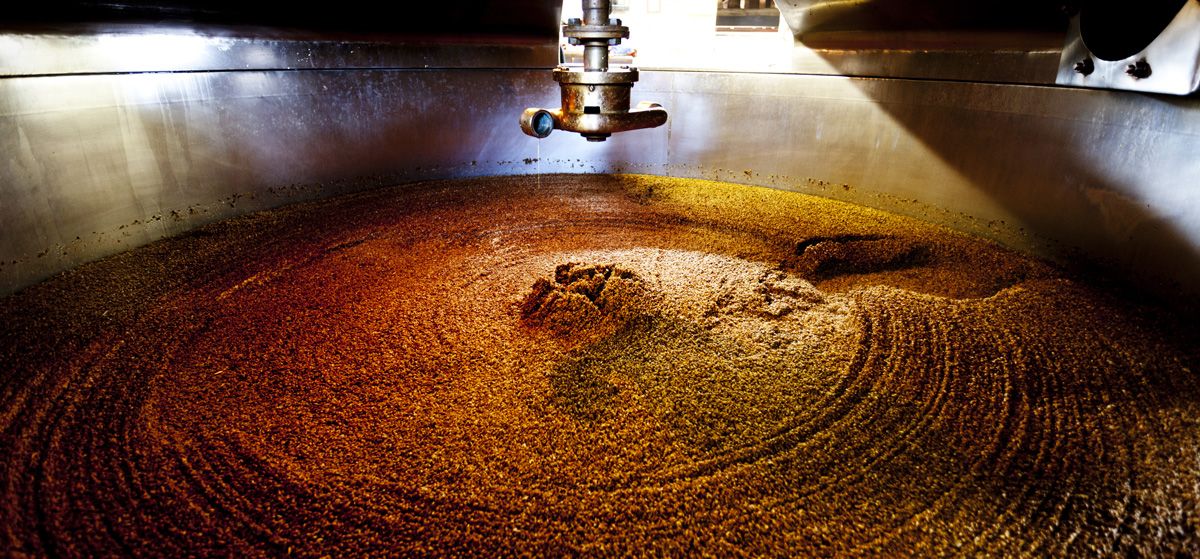
Before you launch a new product or expand your presence into new areas, it’s imperative to have a complete understanding of your company’s ability to successfully complete the registration process and meet all compliance requirements in each area.
What does your internal team look like? Is it equipped to handle an influx of new responsibilities and obligations? Are you prepared to meet each state’s requirements for registration? Do you have the financial resources? The key to successfully entering new regions is to have everything in place before entering new markets. Identifying openings in the market is important, but you also have to identify your own capabilities before making moves, and then identify the right time to do so.
2. Know The Market
Speaking of identifying openings in the market – you need to consider the state of the market. Keep an eye on what’s trending right now, and maintain a close watch on newer products that could possibly explode onto the scene. To expand your footprint, your brewery needs to have products that both reflect what’s currently popular and also are different enough from everyone else that you can stand out from the crowd.
Are your products diversified enough from what everyone else is offering in a certain region? What are the top-selling beer types and brands there? How did your beer perform at regional events? A comprehensive grasp of the markets you intend to enter is critical to the success of your expansion campaign, so you should be sure to follow those markets for quite a while before making a commitment to them.

3. Know Your Brand Story
Every business needs to know how to sell its products, but half the battle is figuring out how to sell the brand itself. Not only are you competing with hundreds – and, depending on the product, possibly thousands – of like-minded brewers for shelf space in stores or bars; you’re also selling to a consumer base that can be influenced by the visual design of your products. You’ll need to distinguish your story from everyone else’s – many breweries today cultivate an image reflecting their “passion” for beer. How can you put a unique and personal twist on that?
Maintaining a positive image surrounding your brewery, winery, or distillery is crucial to attracting buyers. This can be achieved via aesthetically appealing packaging, an emotionally compelling brand story, and even a unique value proposition like a beer crafted with an uncommon ingredient or collaboration with another company. Does your brand effectively tell your story and convey a positive message to your audience?
4. Know Your Customers
The most important part of any brewery expansion strategy: Understanding your audience. First and foremost, you need to identify which demographics are most likely to buy your products. Where do they live? How old are they? What are they looking for in a wine, beer, or spirit? What other brands do they currently buy?
Once you figure out what motivates your consumers to buy certain alcoholic beverages, you can begin speaking their language. If you’re trying to introduce locally successful products to a new region, learn about the audience in that area and appeal to their interests. A product that resonates with the locals and sells well in, say, San Diego might not have the same impact in Tennessee.
5. Know Your Strategy
Expanding into new territories is an exciting prospect – but it also needs to be meticulously planned in advance. There are many examples around the industry of alcohol producers attempting to grow too quickly, and being forced to scale back their operations as a result. You need to figure out your distribution strategy in each new area you intend to enter, but you also need to refine your sales pitch so you can hit the ground running once you enter these markets.
Will you sell your beer in bottles, cans, growlers, or some combination of the above? Are you going to approach local markets with individually designed plans? Will you take a more broad regional strategy? Or do you plan to target a national audience and use the same messaging and product placement in every market you enter? Each of these approaches has worked in the past, but you have to commit to the strategy once you determine which route you plan to go.
6. Sort Out Your Logistics
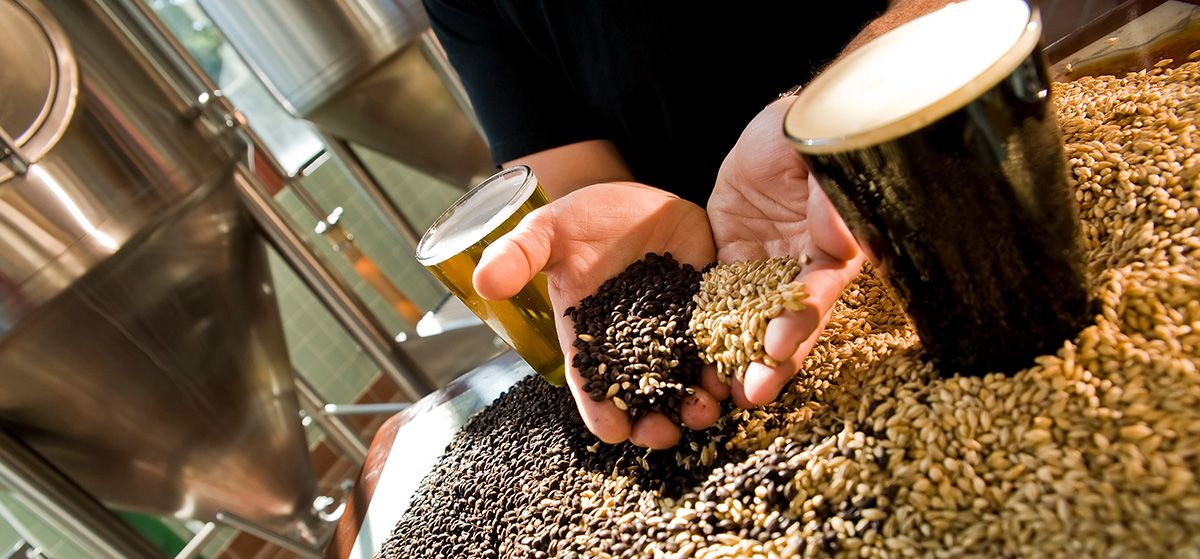
Ok, so you have your product strategy in place. Now you need to make sure you can go out and execute on it. This means getting your logistics sorted out, from supply lines to infrastructure. These factors will vary by area and by the ingredients included in your beer you sell, so it’s important to understand the ins and outs of each place and product.
Once you get your supply chain in place, you can start selling beer in new areas and leveraging distributors to help expand your reach.
7. Line Up Distributors
Distributors are in many ways the lifeblood of the bev alc industry, so don’t take your dealings with them lightly. Ensure they will care for your products and be upfront with the them regarding the time and resources you need. Verify that your products fit in with their sales model and establish clear goals that you can use to measure success (and write those down in your contract). Taking the time upfront to check that your distributors are set to meet your needs can save a lot of headache down the road.
So, how can you form a positive business relationship with a distributor?
Good question! First, you have to prove your products are valuable. What do your sales figures look like? Are you producing varieties of drinks that are popular enough to sell in new areas? Once you demonstrate to distributors that your brand has a worthwhile product (or products), you can begin to attract attention. Certain distributors will be a better fit than others based on your expansion strategy, so it’s important to choose one that aligns well with your efforts based on regional infrastructure, shipping capabilities, and localized networks.
Next comes the “fun” part: Negotiation. You can easily be trapped in a bad deal if you aren’t careful and sign a formulaic contract. If a states has franchise laws, that can make getting out of a bad deal even harder. Hire a lawyer who will help you draft and clear and enforceable contract. A legal advisor experienced with beverage alcohol can negotiate on your behalf to strike the best possible deal and avoid future problems.
Another key component is establishing good partner relationships. If your brand managers, ambassadors, and solicitors (or anyone else representing you) develop a positive rapport with your partners, they may be more likely to help promote your brand.
8. Get Your Brewery Compliant
Your brewery is very close to being ready to enter new markets now! This means it’s time to obtain all the correct licenses and registrations you need to legally distribute your brews in new regions. Each state has its own unique requirements and you’ll be responsible for knowing when and what you need to do to ensure you register properly and are in compliance. Between excise taxes, shipping reports, licenses, registrations, price posting, Certificates of Label Approval (COLAs), compliance for a brewery can be complex.
If this seems overwhelming, Sovos ShipCompliant can help your business obtain all the necessary licenses and registrations with our Market Ready solution. Learn more about Market Ready.
9. Stay on Top of Compliance
Once you acquire the licenses and registrations you need to operate in new areas, you need to make sure you stay on top of compliance. This means regularly paying taxes and filing shipping reports, but it also means being proactive. Track your data and measure the performance of your brewery periodically – are you meeting goals and expectations? What is and is not working with your compliance processes? Are you in good standing with each state where you have sales?
Getting behind on state filings can put your business at risk of incurring penalties and interest, or even worse: Potentially losing the license to sell your products in states where you are not in compliance. Sovos ShipCompliant’s 3-Tier Reporting solution can help you stay on top of revisions, license renewals, and any other challenges you may have.
10. Rinse and Repeat
You’ve tackled your brewery expansion successfully and have moved your products into new markets. Congratulations! But you aren’t done – now it’s time to measure your successes, learn from any mistakes you’ve made, and get right back to planning for further expansion. This might mean moving into even more new regions, or it could mean expanding your product lines and increasing product diversity.
Are you in a position to introduce new beers or other products to the market? Are you ready to take the next step toward being a nationally recognized brewery? Are you positioning yourself to be acquired by a larger brand, or to make an acquisition to grow your own brand?
Whatever route you choose to take, you have the tools to go out and conquer the world...or, at least the beverage alcohol industry.

See for yourself how Sovos ShipCompliant can help your brewery stay on top of compliance
Request a DemoSubscribe to our Newsletter
Get monthly updates on Sovos ShipCompliant resources, data reports, fresh resources and more.
Subscribe now