Ready for a Vinoshipper Alternative?

Are you confident shipping under Vinoshipper’s licenses? Do you have confidence in managing costs effectively as your shipping requirements evolve?

Learn why wineries, breweries, distilleries and more choose Sovos ShipCompliant as an alternative to Vinoshipper. Our solutions make it easier to navigate constantly evolving direct-to-consumer shipping laws, minimize risks associated with compliance and provide transparent pricing to ensure clear cost management as your business grows.

Sovos ShipCompliant emphasizes the importance of wineries and other alcohol producers shipping products under their own licenses to ensure compliance with direct-to-consumer (DtC) shipping regulations. Relying on third-party services that claim to cover licensing on behalf of producers is legally risky and can lead to significant consequences.

Operating under another entity's license may violate state laws, potentially resulting in fines, penalties or even loss of production licenses (if, for example, the state whose laws were violated notifies your home state’s licensing body). You want to remain confident that your business won’t be hindered by legal action. Therefore, it's crucial for each producer to obtain and maintain their own shipping licenses for the states into which they ship.


The Top Reasons to Choose Sovos ShipCompliant Over Vinoshipper

  • Full confidence in safeguarding against risks
    • Sovos ShipCompliant has deep knowledge of state-specific laws for alcohol distribution, which is essential for navigating the complex regulatory environment of alcohol sales in the U.S.
    • We are the trusted beverage alcohol compliance partner for more than 2,000 wineries, breweries, distilleries, importers, distributors and more.
  • End-to-end compliance
    • Our all-in-one compliance solutions cover direct-to-consumer shipping, wholesale distribution and state-specific regulations.
    • Powerful reporting and analytics tools help producers track shipments, monitor compliance and ensure accurate tax filings and reporting with ease.
  • Effortless connectivity with industry-leading integrations
    • Our integration with the TTB provides a streamlined, direct COLA submission tool, making it easy to generate registrations for state requirements—no matter the submission method. Exclusive integrations with state systems enable faster, more efficient state reporting.
    • We integrate with FedEx to adhere to state-level alcohol shipping regulations, age verification requirements and real-time tracking

How do Sovos ShipCompliant’s solutions compare to Vinoshipper?

If you are shipping to more than a handful of states or actively entering new states, you might be thinking about how to centralize and streamline your DtC shipping compliance. Sovos ShipCompliant is the safest solution in the risky world of beverage alcohol shipping management and compliance.

How Clients Have Succeeded with
Sovos ShipCompliant

Case Study: Buttonwood Grove Winery

Buttonwood Grove Winery expanded their wine club from shipping to seven states to having capacity to serve customers in 17 states. 
Read more

Case Study: Moshin Vineyards

Moshin Vineyards saved more than 50 hours a month by moving from manually managing its compliance process.

Read more

Case Study: Vineyard Brands

Vineyard Brands eliminated the need to manually track individual state requirements.

Read more

Learn More About Finding a Partner to Get and Stay Compliant

You can leave the uncertainty of Vinoshipper behind when you trust your compliance needs to Sovos ShipCompliant.

"ShipCompliant integrates seamlessly with our ecommerce platform and FedEx ship manager. We have confidence that we are charging the right amount of tax to the customer, and then reporting what actually got delivered. We can see all our licenses and tax reports in one place, and month-end compliance is a breeze. It's really kind of magic!"

Eden Specialty Ciders

Subscribe to our Newsletter

Get monthly updates on Sovos ShipCompliant resources, data reports, fresh resources and more.

Subscribe now

How to Lay the Groundwork for Successful DtC Shipping and/or Wholesale Distribution

A guide for producers who are just starting out

While compliance for direct-to-consumer (DtC) shipping and wholesale distribution should never be an afterthought, there are a few steps your business will need to take before you’re ready to make the most of compliance software.

What follows is not a comprehensive guide, but pointers on key concerns for wineries, breweries, distilleries and other producers that want to move into direct-to-consumer shipping or distribution through the three-tier system.

Contents

Getting licensed

Across the board, states will require your business to hold the appropriate license(s) to distribute or -ship directly to consumers in their state. There are a few ways to approach this important hurdle. The three main ways to get licensed are DIY, a hybrid approach or outsourcing to an expert.

Doing it yourself will cost the fewest dollars, but this method is the most likely to result in headaches and delays as you navigate complex state bureaucracies.

A hybrid approach keeps you in the hands-on role, but supported by software that guides you to more complete, approval-ready license applications.

Outsourcing to an expert, such as a consultant, attorney or Sovos ShipCompliant, allows you to hand off all licensing tasks to an experienced professional who manages the entire process on your behalf.

License applications are typically returned by the states between a few weeks and two months or more after the application is made, so it pays to plan ahead. (Some DtC shipping licenses are granted immediately, and Florida, Minnesota and Washington, D.C. do not require a DtC shipping license, although you may need to collect and remit sales tax within those locales, depending on the economic nexus status of your business.)

Learn more

Scale of operations

You know better than anyone what your realistic production target will be, based on your facilities and other resources, along with market demand. Your annual production will influence your go-to-market strategy as described below. And of course, the greater volume you ship DtC or distribute wholesale – or both – outside of your home state will increase your compliance management needs.

Learn more

dtc shipping

Going to market

Considering your total annual production, identify how much you aim to sell own-premise (tasting room/tap room), on-premise (through wholesale distribution), off-premise (also via wholesale) and/or DtC shipping. Each means of getting your product to market involves different efficiencies, costs, licensing requirements and marketing considerations.

Learn more

Sales partners: ecommerce and/or wholesale

It’s never too soon to begin researching and selecting your sales partners, whether that be an ecommerce platform, a distributor (wholesaler) partner or both. Consider allowing six to 12 months for these processes.

Set yourself up for success by selecting an ecommerce platform that can provide accurate sales tax rates for beverage alcohol products and not just general merchandise. Talk with your ecommerce partner about realistic timelines for establishing a web store and what will be required of you in the process. Many producers streamline success by adopting an ecommerce platform that is fully integrated with Sovos ShipCompliant, enabling seamless, automated compliance when the time comes.

If you plan to sell wholesale, do your due diligence with candidate distributors to identify what they would require to bring you on board, and what the benefits and limitations of the contractual relationship would be.

Learn more

Fulfillment

Whether you’re still putting the finishing touches on your business plan or producing product ready for sale, aspiring DtC shippers do well to think ahead about fulfillment, or how you’ll get packages to customers — compliantly and with the kind of tracking capabilities that enable top-notch customer service. Will you work with a third party such as a fulfillment house, or handle it in house? If you decide to work with a third party, ask how their processes will connect with your ecommerce and compliance partners.

Common carriers like FedEx and UPS are also critical to your success as a compliant DtC shipper, avoiding fines and penalties. Alcohol shipments always require ID verification and an adult’s signature, so work with carriers that fully commit to following the law. While the burden is levied on the carriers, your shipping license is the one on the line. Your ecommerce or fulfilment partner may recommend a preferred carrier.

Learn more

Taxes and reporting

Out of the gate, you’ll also want to be thinking about how to collect and report/remit taxes with tools that help you minimize costly errors.

While there’s a lot to consider here, perhaps the most important guidance is to be sure you’re collecting alcohol-specific tax rates at the specific, destination level. This allows your business to avoid over- or under-collecting taxes, each of which comes with its own problems and even legal consequences.

Also note that once you receive your licenses, you will often have an obligation to begin reporting to the corresponding states, even if you have not yet made sales there. This is called a zero-dollar report, and Sovos ShipCompliant can help you with these as you are getting started.

If you plan to use Sovos ShipCompliant’s tax calculation and filing solution, you’ll want to allow four to six weeks for implementation. Many customers time their kickoff with ShipCompliant around the same time that license applications are being filed.

Learn more

Go deeper

Subscribe to our Newsletter

Get monthly updates on Sovos ShipCompliant resources, data reports, fresh resources and more.

Subscribe now

Infographic: Top 6 Considerations for Picking a DtC Compliance Partner

Subscribe to our Newsletter

Get monthly updates on Sovos ShipCompliant resources, data reports, fresh resources and more.

Subscribe now

Infographic: Distilled Spirits DtC Shipping Checklist

Subscribe to our Newsletter

Get monthly updates on Sovos ShipCompliant resources, data reports, fresh resources and more.

Subscribe now

A Buyer’s Guide to DtC Alcohol Shipping Compliance Software

Choosing the right solution for your business

Introduction

With rising ecommerce demands and more people than ever before working remotely, direct-to-consumer (DtC) shipping of beverage alcohol has also grown in popularity. Consumers have become accustomed to being able to have their favorite wines, beers, and spirits shipped directly to their front door. Producers, shippers, and retailers are all working toward maintaining DtC compliance, but it’s hardly an intuitive process, especially as businesses grow and regulatory landscapes change.

Whether you’re a large-scale winery expanding into new states or a small-scale distillery growing its product line, you’ve come to the realization that maintaining DtC shipping compliance is no easy feat. You understand what you need to do, but perhaps aren’t sure the best way to go about doing it. Is investing in DtC shipping compliance software even necessary?

Not making that investment could cost your organization time and money—especially if you are shipping to more than a couple of states or to states with complex rules and reporting requirements. Maybe you have one employee dedicating days every single month to trying to account for all state requirements. What happens if you catch a mistake? Do you ship the product out, knowing you’ll get fined after the fact? Or do you delay the shipment, leading to unhappy customers?

The cost of “doing nothing” can be immense, which is why we’ve outlined how to find the right DtC alcohol shipping compliance software.

DtC alcohol shipping compliance software is a specialized solution that helps wineries, breweries, distilleries, and retailers manage the complex regulatory requirements of shipping alcohol directly to consumers. From state-by-state shipping rules to tax calculations and reporting obligations, this software centralizes and automates critical compliance tasks.

Instead of manually tracking changing laws, businesses can rely on DtC alcohol shipping compliance software to stay current with regulations, ensure orders meet shipping eligibility requirements, and maintain accurate records for audits and filings.

Most solutions include capabilities such as automated tax determination, license tracking, reporting and filing support, and real-time validation of shipping rules. These tools reduce the risk of noncompliance while enabling businesses to confidently scale their direct-to-consumer operations.

request a demo

Direct-to-consumer alcohol shipping compliance is uniquely complex because there is no single, unified regulatory framework. Each state—and sometimes local jurisdiction—has its own set of rules governing who can ship alcohol, what products can be shipped, and under what conditions.

For example, requirements may vary based on:

  • Product type (wine, beer, spirits, cider or other)
  • Volume limits per customer
  • Dry counties or restricted shipping areas
  • Licensing requirements for producers and retailers
  • Ongoing regulatory changes

As businesses expand into new markets, keeping track of these variations becomes increasingly difficult. Without the right systems in place, even small errors can result in shipment delays, fines, or license risks.

Get the big picture on DtC shipping requirements across the state in our complimentary eBook, DtC Alcohol Shipping Essentials: Getting Started & Staying Compliant.

  • Regulatory research burden
    Keeping up with state-by-state alcohol shipping regulations requires constant monitoring, and manual research increases the risk of outdated or inaccurate information.
  • License and renewal tracking
    Managing multiple licenses and renewal deadlines can become overwhelming, with missed dates potentially disrupting operations.
  • Tax calculation errors
    Varying tax rates across states, products, and jurisdictions make manual calculations error-prone, leading to penalties or rework.
  • Reporting and filing risks
    Different requirements and deadlines across jurisdictions increase the likelihood of missed or inaccurate filings.
  • Employee time costs
    Teams spend significant time on compliance tasks, limiting their ability to focus on other revening-growing activities.
  • Risk of fines and license suspension
    Errors in filings or unauthorized shipments can lead to fines, audits, or loss of shipping privileges.

Alcohol shipping regulations don't stand still. States update laws, adjust volume limits, and introduce new requirements on a rolling basis, and it falls on your team to catch every change. At the federal level, the Alcohol and Tobacco Tax and Trade Bureau (TTB) sets baseline requirements for direct shipping, but state laws add another layer of complexity that varies by jurisdiction, product type, and local rule. For businesses using beverage alcohol compliance software, regulatory updates are maintained automatically by a team of experts. Without it, someone on your team is constantly monitoring legislative updates, cross-referencing product-specific rules, and verifying local restrictions like dry counties. This kind of ongoing regulatory research is time-consuming on its own, but the real risk lies in what gets missed. Outdated information can lead to non-compliant shipments, and by the time a violation surfaces, the damage is already done: fines, delays, and frustrated customers.

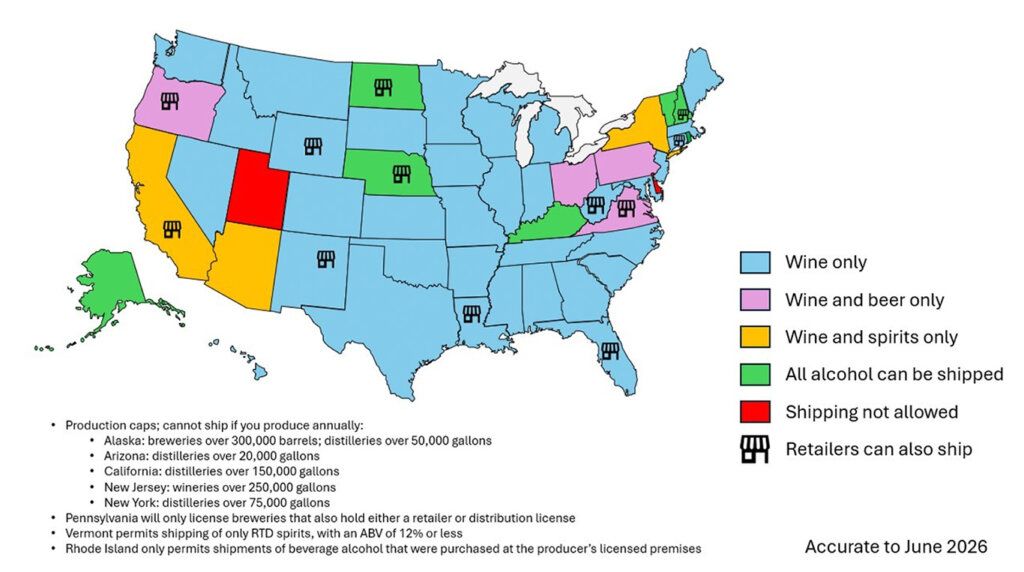
Who Can Ship What Where?

Shipping alcohol DtC requires maintaining active licenses in every state where you operate, and each state has its own application requirements, fees, and renewal timelines. Managing this manually, whether through spreadsheets, calendar reminders, or physical files, leaves too much room for error. A missed renewal deadline doesn't just mean extra paperwork; it can mean losing the ability to ship into that state entirely until the license is reinstated. As your business expands into new markets or adds product lines, the number of licenses to track grows quickly, turning what was once a manageable task into a significant operational risk.

Alcohol taxation is among the most complex in the country. Rates vary not just by state, but by product type, volume, alcohol content, and even local jurisdiction. In some areas, the applicable tax rate can change from one side of a street to the other. Without alcohol tax compliance software, calculating these figures manually for every order across every state you ship into creates enormous potential for error. Underpaying can result in penalties and back taxes; overpaying affects your margins and customer experience. And because alcohol taxes are applied differently than general merchandise taxes, generic accounting tools typically aren't equipped to handle the nuances, leaving compliance teams to fill the gap by hand.

Most states that permit direct-to-consumer alcohol shipping compliance require regular reports detailing what was shipped, to whom, and in what quantities. Deadlines, formats, and submission methods vary by jurisdiction, and the volume of data involved grows with every new state you enter. Teams managing this manually often find themselves piecing together records from multiple sources—including order management systems, carrier data, and tax worksheets—to compile each report. The margin for error is wide, and a late or inaccurate filing can trigger audits, penalties, or increased regulatory scrutiny. As shipment volumes increase, so does the complexity of staying on top of every reporting obligation on time.

Compliance is necessary, but it doesn't have to consume your team. For businesses relying on manual processes, compliance tasks such as researching regulations, tracking licenses, calculating taxes, and preparing reports can easily consume several days of employee time each month. That's time that could be spent on customer acquisition, operational improvements or business growth. Wineries, breweries, and distilleries of all sizes face this challenge, which is why brewery compliance software and broader beverage alcohol compliance software solutions are increasingly becoming a standard investment rather than an optional one. As order volumes increase and you expand into new states, the burden grows proportionally. The compounding cost isn't just in hours; it's in the opportunity cost of skilled employees spending their days on repetitive administrative work rather than higher-value initiatives.

The consequences of non-compliance aren't theoretical. They're real, and they can be severe. Shipping to a state without the proper license, exceeding a customer's volume limit, or failing to remit taxes accurately can result in cease-and-desist letters, monetary fines, or the suspension of your shipping privileges. In some cases, losing a DtC license can trigger scrutiny of related licenses, including production permits. Beyond the direct financial cost, compliance violations can damage your brand's reputation and erode trust with state regulators, making future license approvals more difficult. For growing businesses, the cost of a single significant violation can far exceed what compliance software would have cost to implement.

Managing compliance manually may seem manageable at first, but it becomes unsustainable as businesses grow.

Manual ComplianceDtC Compliance Software
✘ Time-consuming regulatory research✔ Automated regulatory updates
✘ Manual tax calculations✔ Accurate, automated tax determination
✘ High risk of errors and missed deadlines✔ Built-in compliance safeguards
✘ Limited scalability✔ Supports growth across multiple states
✘ Reactive compliance approach✔ Proactive, real-time validation

For many businesses, investing in DtC alcohol shipping compliance software shifts compliance from a reactive burden to a scalable, efficient process.

When evaluating alcohol shipping compliance software, it’s important to look for features that address the full lifecycle of compliance.

Key capabilities include:

  • Real-time compliance validation
    Ensures orders meet shipping rules before fulfilment
  • Automated tax calculation
    Calculates accurate tax rates across jurisdictions
  • License management tools
    Tracks licenses, renewals, and jurisdiction requirements
  • Reporting and filing support
    Simplifies preparation and submission of compliance reports
  • Integration capabilities
    Connects with ecommerce platforms, ERPs, and order management systems
  • Audit-ready recordkeeping
    Maintains detailed transaction and compliance records

Selecting a solution with these features helps reduce risk while improving operational efficiency.

Before selecting a DtC alcohol shipping compliance software provider, consider the following questions:

  • How frequently are regulatory updates maintained?
  • Does the solution support all states where we currently ship—or plan to expand?
  • How does the platform handle tax calculation and reporting?
  • Can it scale with increasing order volume?
  • What integrations are available with existing systems?
  • What level of support and onboarding is provided?

These questions can help ensure the solution aligns with both current needs and long-term growth plans.

As businesses expand their direct-to-consumer operations, compliance complexity grows alongside them. DtC compliance software enables organizations to scale without increasing compliance risk.

By automating key processes such as tax calculation, reporting, and license tracking, businesses can:

  • Enter new markets with greater confidence
  • Reduce operational bottlenecks
  • Improve order processing efficiency
  • Enhance customer experience through faster fulfilment

Ultimately, compliance software allows teams to focus less on manual compliance tasks and more on strategic growth initiatives.

Implementing compliance software typically involves integrating the solution with existing ecommerce or order management systems, configuring jurisdiction-specific settings, and training internal teams. While timelines can vary, most organizations can expect a structured process that includes initial system setup and configuration, data migration or system integration, user training, and ongoing support during onboarding. A well-managed implementation ensures a smooth transition from manual compliance to a more automated, scalable approach.

Beverage alcohol producers choose Sovos ShipCompliant because it is purpose-built to address the complexities of direct-to-consumer alcohol shipping compliance.

ShipCompliant helps businesses:

  • Automate compliance across multiple jurisdictions
  • Calculate taxes accurately in real time
  • Manage licenses and reporting obligations
  • Stay current with evolving regulations

With deep industry expertise and a focus on accuracy and scalability, Sovos ShipCompliant enables businesses to confidently grow their DtC operations while reducing compliance risk.

Conclusion

Managing direct-to-consumer alcohol shipping compliance is becoming increasingly complex as regulations evolve and businesses expand into new markets. Relying on manual processes can introduce unnecessary risk, inefficiencies, and missed growth opportunities.

DtC alcohol shipping compliance software provides a scalable, automated approach to managing regulatory requirements, helping businesses reduce risk while improving operational efficiency.


Ready to simplify your compliance process?

Explore how Sovos ShipCompliant can support your DtC growth and help you stay ahead of changing regulations.

Why do wineries need compliance software?

Wineries need wine shipping compliance software to manage complex state regulations, ensure accurate tax calculation, and streamline reporting requirements when shipping directly to consumers.

What does alcohol compliance software do?

Alcohol compliance management software automates regulatory tasks such as tax calculation, license tracking, reporting, and validating shipping eligibility based on state laws.

Do wineries need compliance software to ship alcohol?

While not always required, compliance software significantly reduces risk and improves efficiency, especially for wineries shipping to multiple states.

How does compliance software help with taxes?

It automates alcohol tax determination across jurisdictions, reducing errors and ensuring accurate filings.

Can compliance software manage licenses and renewals?

Yes, most solutions include tools to track licensing requirements and renewal deadlines across states.

Does compliance software support beer, wine and spirits shipping?

Many platforms support compliance for multiple product types, including wine, beer, and spirits, depending on jurisdictional rules.

How long does compliance software implementation take?

Implementation timelines vary depending on business complexity, integrations, and data migration needs.

Subscribe to our Newsletter

Get monthly updates on Sovos ShipCompliant resources, data reports, fresh resources and more.

Subscribe now

4 Signals Your Business Is Ready for Distribution Compliance & Management Software

How do you know when it’s time to adopt wholesale distribution compliance software? Here are 4 considerations to help you decide.

Subscribe to our Newsletter

Get monthly updates on Sovos ShipCompliant resources, data reports, fresh resources and more.

Subscribe now

What to Expect When Implementing Wholesale Distribution Compliance Software

Introduction

Implementing wholesale distribution compliance software is no small feat, but it doesn’t have to be a difficult experience. By understanding the implementation process, you’ll feel confident and ready to make the switch and finally streamline state registrations, state reporting, distributor management and more.

Key considerations when implementing new compliance software 

What do you need to keep in mind before getting your three-tier compliance in order using a software solution? Here are some things to think about, based on what we’ve learned by helping 2,000+ clients get a handle on their brand registrations, state gallonage reporting and so many other facets of their business.

  • Buy-in from internal stakeholders: A team that fully understands how a software solution can reduce risk, centralize processes and help gain efficiency is a team that will help drive the project to the finish line.
  • Right timing for the business: Don’t let perfect be the enemy of good. While there’s no just-right time to make changes in any business, choose a time that doesn’t conflict with your organizational objectives. Don’t compromise success by starting the process during a period where you don’t have resources to devote to getting set up. And keep your eyes on the prize: Many of our customers see time-saving benefits within the first month of their implementation.
  • A point person: Having someone available to work closely with your ShipCompliant implementation consultant will speed up the process and help you meet project milestones. This liaison can provide updates and insight into the implementation process, offering visibility to your organization.


Working with Sovos ShipCompliant 

It generally takes a few training sessions  to get up and running with Sovos ShipCompliant Market Ready or 3-Tier Reporting. You will be asked to share required as well as recommended data that will help to effectively utilize ShipCompliant’s wholesale reporting offering. Your implementation consultant is always available to explain how your data will be utilized to generate complete and accurate state reports and registrations or to answer any questions about the process.

Sovos ShipCompliant helps get your products to market efficiently by pre-populating required fields and supporting documents so you can submit them automatically. By directly integrating with government systems, your state registration filings are expedited, and all held in one place.

In sum, what can you expect when onboarding with Sovos ShipCompliant?

  • World-class software: Our secure, cloud-based software can be accessed from anywhere and is updated centrally, so you never have to deal with inconvenient manual software updates.
  • A customizable solution that fits your needs: Collaborate with your account executive to understand what solution(s) meet the unique needs of your business. We’ll work together to design a set of solutions that includes everything you need. 
  • A team dedicated to your company: Your dedicated implementation consultant will guide you through setting up your customized ShipCompliant account.
  • Support when you need it: Enjoy unlimited free support from a team of specialists available by phone or email. You’ll also have the ability to browse our expansive Help library for self-serve troubleshooting.
  • Continued education: Our educational experts share best practices in our regularly scheduled customer training sessions and webinars. Tune in live or access our on-demand webinars at your leisure.

Take Action

If you’re ready to experience fully accurate, compliant and seamless wholesale distribution management,

Talk to our experts today

Subscribe to our Newsletter

Get monthly updates on Sovos ShipCompliant resources, data reports, fresh resources and more.

Subscribe now

What to Expect When Implementing DtC Shipping Compliance Software

Introduction

Implementing a new direct-to-consumer (DtC) shipping compliance software solution may sound like a stressful experience, but it doesn’t have to be. By understanding the implementation process, you’ll feel better prepared to make the switch. 

Key considerations when implementing new compliance software 

What do you need to keep in mind before getting your compliance in order using a software solution? Here are some things to think about, based on what we’ve seen in our 15+ years of helping clients get a handle on their compliance. 

  • Buy-in from internal stakeholders: A team that fully understands how a software solution can reduce risk, centralize processes and help gain efficiency is a team that drives the project forward. 
  • Right timing for the business: Don’t let perfect be the enemy of good. Choose a time that doesn’t conflict with your business objectives. Don’t compromise success by starting the process during a period where you don’t have the resources to devote to getting it set up. And keep in mind that while there’s no perfect time to make changes in any business, our clients report seeing time-saving benefits within the first month of their implementation. 
  • A point person: Having someone available to work closely with your implementation consultant will speed up the process and help you meet project milestones. This liaison can provide updates and insight into the implementation process, offering visibility to your organization. 

Working with Sovos ShipCompliant 

Sovos ShipCompliant’s implementation process was designed to bring your organization online in a matter of weeks, so that you can quickly experience the value of using the software. You’ll be paired with a dedicated implementation consultant who will let you know what information is needed to get your account set up and why, giving you visibility into the compliance process. 

This includes a set-up checklist to help gather the data required to perform compliance checks, calculate tax rates and ready tax returns to report on each of your DtC orders. After you’ve shared all necessary information for the states you sell to, you can rely on ShipCompliant to ensure compliance everywhere you do business, every time. 

In sum, what can you expect when onboarding with Sovos ShipCompliant?

  • World-class software: Experience real-time compliance checks and alcohol-specific rooftop-level tax determination for seamless operations. Our secure, cloud-based solution is accessible from anywhere and never requires cumbersome manual software updates. 
  • A fully customized solution: Collaborate with your account executive to understand what solution(s) meet the unique needs of your business. We’ll work together to design a set of solutions that includes everything you need. 
  • A team dedicated to you: Work with a dedicated implementation consultant to guide you through setting up your customized ShipCompliant account. 
  • Support when you need it: Enjoy unlimited free support from a team of specialists available by phone or email. You’ll also have access to our robust Help library for self-serve troubleshooting. 
  • Continued education: Join our regularly scheduled webinars and customer training sessions to stay up to date on the regulatory landscape your business faces. Our educational experts share best practices for seamless usage of Sovos ShipCompliant products. 


Implementing a new DtC shipping compliance software takes time, but the ShipCompliant team is dedicated to delivering value to your company from day one. With Sovos ShipCompliant, your DtC shipping compliance software is built by a team of experts with your company’s goals in mind. Our team is ready to help you get set up with a streamlined and automated DtC shipping compliance solution that will give you peace of mind. 

Take Action

Are you ready to experience fully compliant, accurate and seamless DtC shipping management?

Talk to our experts today

Subscribe to our Newsletter

Get monthly updates on Sovos ShipCompliant resources, data reports, fresh resources and more.

Subscribe now

Meet Sovos ShipCompliant!

This one-minute video provides a quick introduction to our compliance and reporting solutions for wineries, breweries, distilleries, cideries, distributors, importers and other members of the beverage alcohol industry.

Subscribe to our Newsletter

Get monthly updates on Sovos ShipCompliant resources, data reports, fresh resources and more.

Subscribe now

Delivery Management Software

A loyalty-building customer experience may start in your tasting room or on your website, but it doesn’t end there—certainly not if you’re working with ShipCompliant Delivery Experience tools to manage your direct-to-consumer shipping process.

License Management for Wineries

With this cloud-based delivery management software, you can:

  • Improve first-attempt delivery rates
  • Drive customer loyalty and improve reorder rate
  • Build customer satisfaction through customized email communications at key shipment milestones
  • Minimize expensive, frustrating returns
  • Measure your fulfillment performance to identify areas of improvement

Curious to learn more about how Delivery Experience provides all of the benefits described here? Take a peek at these mini demos—a series of six short videos that offer a detailed look at the different components of our delivery management software, including a quick overview, getting to know the dashboard, unshipped packages and en route views, email tools, and performance metrics.

Delivery Experience: Overview


An introduction to Sovos ShipCompliant’s delivery management software capabilities and what they can do to strengthen your DtC shipping processes

Delivery Experience: Dashboard


A look at DEX’s shipping command post, which provides visibility into the entire shipping process, from before a package goes out to after it is delivered

Delivery Experience: Unshipped Packages


How Sovos ShipCompliant’s delivery management software surfaces key order information before shipping to ensure nothing gets held up

Delivery Experience: En Route View


A look at how Sovos ShipCompliant’s delivery management software displays where all packages are in the shipping process in real-time

Delivery Experience: Email Communication Tools


An overview of how DEX’s automated and manual custom-branded email tools help you keep customers up-to-date on their shipments

Delivery Experience: Performance Metrics


How Sovos ShipCompliant’s delivery management software analyzes your DtC shipping return rate, delivery rate, and other shipping performance metrics, along with NPS

Want to see what Delivery Experience can do for you?

Request a Demo

Subscribe to our Newsletter

Get monthly updates on Sovos ShipCompliant resources, data reports, fresh resources and more.

Subscribe now