
It’s good to see light at the end of the tunnel. Nonetheless, it’s too little, too late for many smaller – but also plenty of larger – companies. Thousands couldn’t weather the storm because they were particularly dependent on human contact. Others were affected disproportionally simply because COVID-19 hit them just as they traversed a […]

During the past few months, in the absence of formal clarification, there has been much speculation on whether the Indian authorities would move forward with the expansion of the mandatory e-invoicing scope. While some have raised concerns that the Indian mid-market to SME segment would not be ready for such a change, others, including government […]

2021 sees several significant regulation changes for insurers when complying with insurance premium tax (IPT) across Europe. These include a new reporting system, an IPT increase, and new exemptions. To help insurers understand these changes, in this blog we’ll look at each of these changes. Spain – IPT increase Probably the most significant change this […]

Since April 2019, the UK has required the submission of VAT returns and the storage of VAT records to be completed in accordance with the requirements of its Making Tax Digital (MTD) regulations. One of these requirements is that data transfer between software programs be achieved through ‘digital links.’ This requirement was initially waived during […]

Following the introduction of ‘fiscalization’, Albania’s Continuous Transactions Controls scheme (CTC), in early 2020, the Albanian government published more information about the CTC system and in late 2020 updated the roll-out timeline. During 2020, the Albanian government published a series of secondary legislation about different elements of the CTC scheme. The Albanian CTC scheme is […]
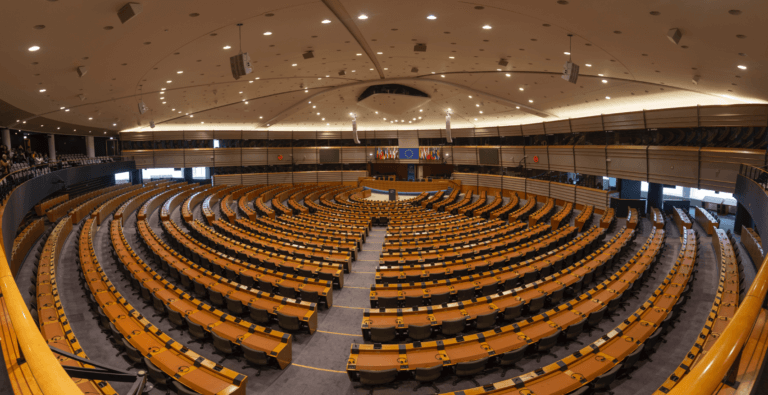
The EU introduces the E-Commerce VAT Package and OSS on 1 July 2021. The previous delay from 1 January 2021 was due to the COVID-19 pandemic. COVID-19 is far from resolved with many Member States still suffering significantly with wide-ranging restrictions in place in many countries. Regardless, the European Commission’s current plan is to press ahead […]

The new India’s e-invoicing expansion has been live since October 2020 and it has been rolled-out in phases. The first phase started in October 2020 with taxpayers with a 500 Cr. rupees threshold or more and the second phase continued in January 2021 covering taxpayers with a threshold of 100 Cr. rupees or more. The […]

The trend of real-time data collection as a tax control mechanism by tax authorities across the world is not much of a surprise now, quite the contrary. One by one and at increasing speed, governments are rolling out local adaptions of Continuous Transaction Controls regimes, more commonly referred to as CTCs. However, new trends are […]

The rapid rise of digitisation continues to transform companies’ business processes. Companies have either begun their digital transformation as a result of compulsory mandates or are voluntarily making the change. While digitalisation provides time, cost and workforce efficiencies, it has enabled greater cross-border business. The increasing digitisation of tax has seen companies look to third-party […]

The EU is re-considering plans to give its Member States more freedom to determine which goods and services should be subject to reduced rates in their territory. The proposed changes would also allow Member States the opportunity to apply a third reduced rate. Current VAT rate system Currently, the EU VAT Directive gives national governments […]

The basic principle of value added tax (VAT) is that the government gets a percentage of the value that is added at each step of an economic chain, which ends with the consumption of the goods or services by an individual. While VAT is paid by all parties in the chain, including the end customer, […]

It’s busy for the Hungarian National Tax and Customs Administration (NTCA). Currently this public body is in the midst of overseeing a transition period for the real-time invoice data reporting system, from version 2.0 to version 3.0. This new version will be mandatory for all taxable persons in the country from 1 April 2021 and […]

The UK entered into a new relationship with the EU on 1 January 2021. The Transition Period ended and the EU-UK Trade and Cooperation Agreement (TCA) came into force. The UK fully implemented this into law but applied on a provisional basis by the EU. The European Parliament needs to ratify it. This is due […]

Back in July 2020, the Turkish Revenue Authority (TRA) published a Draft Communique including several amendments to existing e-document regulations. Very recently, on 9 February 2021, the Draft Communique amendments were implemented into a new Communique, amending General Communique (‘Amending Communique’) with some changes, exemptions and additional provisions. Let´s take a closer look at the […]

Poland: Full steam ahead towards Europe’s next Continuous Transaction Control system Poland’s new e-invoicing law is planned to come in to force in October this year, which will introduce e-invoicing via a national platform in a Continuous Transaction Control system. In this episode of the Sovos Expert Series, Harri Vivian sits down with Anna Norden, […]

2020 was significant for the mandatory transition to e-transformation applications following the General Communique issued by the Turkish Revenue Administration (TRA). 2021 will be a year of mandatory transition to various e-documents for taxpayers. Who must use e-invoice from 2021? Taxpayers with gross sales revenue of TRY 5 million and above in 2020 and all […]

The Polish Ministry of Finance has now published the draft act introducing e-invoicing via the national platform (Krajowy System e-Faktur – KSeF, or National System of e-Invoices) in a Continuous Transaction Control (CTC) system. The draft is available for public consultation during a two-week period, after which the law is planned to come into force […]

Join Anna Norden, Regulatory Counsel at Sovos, as she discusses France’s upcoming move to Continuous Transaction Controls. Continuous Transaction Controls is an approach to tax enforcement whereby transactional data is submitted to the government in conjunction with the actual exchange of such data between the transacting parties. It means that the government gets access […]