
The direct-to-consumer wine shipping channel continues to grow each year, with a 7.4 percent increase in value and 4.7 percent increase in volume in 2019. But starting mid-March 2020, as the pandemic progressed, and buying patterns shifted to rely heavily on ecommerce, we’ve seen a significant spike in growth over last year’s numbers. The DtC channel continues to provide an alternative way for consumers to get their favorite wines, especially right now, as many retailers are closed. Based on data from Sovos ShipCompliant, Wine Vines Analytics and Nielsen, here is a snapshot of how the DtC wine channel has changed as a result of shelter-in-place orders:
The trends that we’re seeing in the past month and a half could have lasting effects on the beverage alcohol industry, long after shelter-in-place orders have been lifted. Consumers may continue to rely on ecommerce for their beverage alcohol purchases after traditional retailers reopen. Also, the temporary changes to beverage alcohol regulations in participating states could become permanent, or at least help pave the way for new, less restrictive rules and regulations to be adopted in the future.
For more data and information regarding the DtC wine shipping channel, download the free 2020 Direct-to-Consumer Wine Shipping Report today.
As of April 28, 2020 the state of New York and the alcohol suppliers within its borders will now be able to streamline the process of filing brand registrations and renewing licenses. With Sovos ShipCompliant’s Product Registration Online (PRO) tool, the process and cost of getting registrations approved for beer, wine and spirits will greatly decrease. PRO allows e-filing for beverage alcohol products and label registrations and is available for both beverage alcohol licensees (suppliers) and for state agencies.
PRO gives suppliers more control over timelines and registrations, allowing them to submit registrations on behalf of distributors. With this new flexibility, a supplier that is willing to front the cost and work with the distributor externally, can submit label registrations themselves. This reduces the potential of having to wait a month or more for the distributor to submit the label so they can move forward and begin selling their product sooner.
New York’s Alcoholic Beverage Control (ABC) Law requires all brand labels for beer, low-alcohol wine, liquor, and hard cider products to be registered and approved by the State Liquor Authority (SLA) before they are brought to market. PRO will allow online submission and approval for state agencies, digitizing brand registrations and the renewal process for beer, cider, wine and spirits.
The NYSLA is one of the nation’s largest state liquor and alcohol regulatory agencies, currently managing more than 39,000 active brands, and is the largest such entity to fully automate its beverage alcohol product registration online via the PRO platform. PRO’s user-friendly compliance interface accelerates NYSLA’s brand registration processing, cutting down expected wait times from weeks to hours in many cases, while also reducing paper waste and shipping costs.
With ShipCompliant PRO, users can submit applications, along with any state fees, for speedy review. Agencies can examine all application details within the PRO portal, leave comments and approve registrations without any paper or postage required. Sovos ShipCompliant retains all historical data for users securely in the cloud.
Many state alcohol agencies continue to rely on costly, confusing and time-consuming manual processes for alcohol beverage brand registration. Using the PRO system, can cut down on costs and time spent on brand registrations and licensed wholesalers, importers and retailers can get their products to market faster and more efficiently.
Learn more on how PRO streamlines brand registration workflows for beverage alcohol licensees and states alike.
Younger or less experienced wine consumers may find speaking with a wine expert at a tasting room or wine retailer intimidating. There is plenty of wine-specific terminology that consumers outside of the wine industry may find opaque or confusing. Don’t underestimate the role that even seemingly basic education can play in helping convert customers. At bars or restaurants there is usually a brief description of the wine, and if not, a server can help guide a consumer with recommendations tailored to their preferences. But this experience and guided help doesn’t always translate when shopping for wine online.
Many people enjoy wine, but don’t know a ton about it. They may have a basic understanding of what styles are out there or what they have liked in the past, but there is a great opportunity to teach and expose consumers to the vast world of wine culture. According to Conversioner, millennial consumers are 40 percent more likely to be influenced by impressive product descriptions that they see online. With education and additional information, consumers of all ages are more willing to get out of their comfort zone and purchase new and different varietals.
In a time where you can find reviews, ratings, and top 10 lists for just about anything on the internet, having information readily available to consumers about your winery’s varietals on your ecommerce website can greatly improve overall customer experience and satisfaction. According to Sales Layer, six out of 10 shoppers point to poor product content as the main cause for leaving a shopping cart, besides price and delivery. Having this added information and elevated customer experience can help your winery standout from the multitude of options available.
After speaking with some of our clients, we’ve captured a few best practices on making a more educational ecommerce platform:
Adding some of these educational pieces will help the consumer feel informed and appreciated during the buying experience. This can improve customer satisfaction and foster a long-lasting relationship between the winery and consumer. Your winery’s ecommerce platform can not only be a place for consumers to purchase their favorite wines, but also a resource to explore and learn more about different varietals.
Sales tax always has been, and always will be, an integral part of compliance for wineries, especially for those shipping direct-to-consumer (DtC). In recent years the standards for determining who is obligated to collect sales tax and at what rates has changed due to evolving legislation like the Supreme Court case South Dakota v. Wayfair.
When a winery wants to ship wine DtC to a particular state, it must obtain a shipping license or permit for that state. This becomes more complicated if the state requires a winery to “voluntarily” accept a sales tax obligation in order to receive the DtC shipping license. Since DtC shipping circumvents retail stores—where sales tax would normally be collected, the state can still ensure their revenue with this requirement.
Collecting sales tax can be complicated. Each state has the power to determine its own laws and regulations in terms of sales and excise tax rates, exemptions, and remittance. The 21st Amendment gives states even more power to tax and regulate alcohol at their discretion. Depending on the state, wine may be taxed at a different rate than all other items such as food and general merchandise, or not subject to sales tax at all.
Wineries are generally required to collect local tax in addition to the base state rate in every state where they are registered for a sales tax license or permit. Once a seller is registered for sales tax with a state, that seller is required to continue submitting returns indefinitely, even when no sales tax is due, until the state expressly releases the retailer from responsibility.
In order to be compliant, wineries must keep up with state and local rates across all relevant jurisdictions, which can be broken down to county, city or even street level. In 2019, Sovos processed over 900 sales tax rate changes in the United States, where there are already more than 12,000 economic nexus laws on the books.
Assessing the proper sales and excise tax rates can be complicated when selling into multiple states. For example, in California the sales tax rate is 7.25 percent plus local rates (which in California as of May 2019 is calculated based on the destination address when goods are delivered to the end consumer) and the excise tax rate is $0.20 per gallon for still wine and $0.30 per gallon for sparkling wine. In New York the sales tax is 4 percent plus local rates and the excise tax is $0.30 per gallon. This is the contrast in rates when comparing just two states; every additional destination state can create an exponentially more complicated web of rates and rules to comply with, making it extremely difficult to manage manually.
Economic nexus requires businesses selling in a particular state to collect and pay tax on the income generated in that state, regardless of physical presence. Each state’s nexus obligations are now based on sales revenue and transaction volume thresholds.
Standards for economic nexus vary by effective date, transaction count threshold, revenue threshold and measurement period depending on the state. This adds even more complexity to the already complicated rules and regulations surrounding sales tax for DtC wine shippers.
This can cause difficulty determining in which states you are responsible for collecting sales tax. For example, in California as of April 25, 2019 remote sellers regardless of transaction volume, that make more than $500,000 in revenue in the preceding or current calendar year meet the economic nexus thresholds and are responsible for collecting sales tax. But, in New York the rules are much more complicated. As a remote seller in New York, if you have more than 100 transactions and $500,000 in revenue in the four preceding sales tax quarters you are responsible for sales tax collection, effective as of June 24, 2019 with a retroactive date of June 21, 2018. In addition to applying nexus laws, many states are also discussing the possibility of retroactive enforcement.
Keeping track which states require sales tax obligation as a condition of obtaining a DtC shipping license, the varying sales and excise tax rates, and the new economic nexus standards can be very difficult to manage. It’s important to understand the revenue and transaction thresholds in each state as well as the effective dates and measurement periods to ensure you are collecting sales tax and properly reporting in every state where you meet the obligation standards.
Determining when your winery is responsible for collecting sales tax in a particular state, and then determining the correct sales and excise tax rates in the jurisdiction of the order’s final destination can be extremely complicated without an automated software solution. If economic nexus or sales and excise tax rates are not properly assessed and reported, it can lead to penalties, fines, or even loss of licensure. Making sure you are collecting the correct rates based off of destination with real-time sales tax determination and compliance checks will keep your winery protected.
Want to learn more about how to manage sales tax determination and reporting? Check out our latest white paper on real-time sales tax determination and compliance checks.
On April 7, 2020, Kentucky became the latest state to adopt rules clearly permitting the direct-to-consumer (DtC) shipping of alcoholic beverages. As established in HB 415, Kentucky residents will soon be able to purchase and receive shipments of beer, wine and spirits from licensed producers across the country.
That this bill includes all types of alcoholic beverages is a notable change from most other states’ DtC shipping laws, which generally only apply to wine.
As set out in HB 415, shipments of beer, wine or spirits will only be permitted under the following conditions:
In addition, shipments will not be permitted into any area in the state where alcoholic beverages generally may not be sold or received, or “dry” regions. However, unlike previous laws that Kentucky had for DtC shipping of wine, the liability for a shipment to a dry region will fall on the consumer. A consumer who intentionally has alcohol shipped to an unlawful address will be fined $250 for a first offense, and $500 for each subsequent offense, while the shipper and carrier will be held harmless. DtC shippers, though, may want to warn their Kentucky consumers of this provision and require their Kentucky consumers to positively affirm they are in an area in the state that allows the sale and receipt of alcoholic beverages.
(Unlike other states, Kentucky establishes its dry/moist/wet regions based on election districts, which do not conform to other boundaries, such as city, county or ZIP designations. This makes it extremely difficult to catalogue and check which addresses in the state lie in a prohibited area.)
While this bill was enacted into law on April 7, it will not become effective until a later, as yet undetermined date, which will likely be in late June or July. This interim time, therefore, will enable the Kentucky ABC to develop the application process and set out clearer instructions on how DtC shippers should abide by the state’s reporting and tax requirements. As these are determined, Sovos ShipCompliant will provide updates.
It is extremely gratifying to see Kentucky clearly open up to DtC shipping of alcoholic beverages. Previously, the state had enacted laws that seemed to permit DtC shipping, but that in fact failed to establish a system for manageable compliance, which kept the state effectively closed. This new bill seems to relieve those compliance burdens (in particular the risk of felony conviction for shippers and carriers who shipped to a dry area), so there is reason to hope that Kentucky residents will soon be able to receive shipments of alcoholic beverages directly from their favorite producers across the country.
Learn how Sovos ShipCompliant Direct can help DtC shippers with compliance, tax and license management.
By: Jason Haas
Jason Haas is the second generation proprietor at Tablas Creek Vineyard, the pioneering Rhone specialist in Paso Robles, California. In addition to his work overseeing the operations there, he serves on the board of directors of the Paso Robles Wine Country Alliance, Rhone Rangers, and Free the Grapes.
Back in 2017, I was having lunch in Boston with a key account manager from our Massachusetts distributor. We were talking about what I’d done on my previous visit, which included a really cool dinner at (sadly now closed) Blue Ginger that had such a large consumer response that they had to move the dinner into a larger room.
I also conducted a sold-out tasting seminar at the terrific retailer Gordon’s in Waltham. I mentioned that we’d sent news about the events out to our mailing list and wine club members, and that I thought this was a big reason why we’d gotten such a good turnout for the events. His response took me by surprise, though it shouldn’t have. He said, “I know, we oppose direct shipping, but I guess it can have its uses.”
The conversation was a great reminder about how misunderstood direct shipping is among many actors in the wholesale market, and how short-sighted their opposition to it is. After all, our wholesale business in Massachusetts was up 38% that year, and rose sharply in 2015 after nearly a decade of essentially flat sales. Our Massachusetts wholesaler sold 34% more wine in 2017 than in 2014. Most businesses would kill for this sort of performance. So, what turned things around?
I would submit that the biggest factor was that in February of 2015, a new law brought Massachusetts into the growing majority of states that allow direct-to-consumer shipping of wine.
At first, it seems counterintuitive that opening up a state to shipments of wines from wineries in other states should help the sales of that winery’s wholesaler. Doesn’t each sale offset another in-state sale? Not really. Here’s why the ability for a winery to ship to a state should generally increase their wholesale sales there:
Whatever the reason or combination of reasons, Massachusetts isn’t the only state where we’ve seen wholesale sales increase in the aftermath of the state opening to direct shipping. It has happened again and again. Between 2006 and 2018, our wholesale sales rose an average of 3% per year. Check out how much some of the larger states (that opened to direct shipping over that period) grew in the first two years after they allowed direct shipping. The year that we started shipping to each is in parentheses:
The average two-year increase in our wholesale sales post-direct shipping in these eleven states was 67%. Why was Florida the one state to decline? I didn’t realize it had, until I pulled this data. But I have a few guesses. First, it’s a state from which we see relatively few visitors, at least for the size of its population. It’s also a state with a very spread-out population, where (unlike, say, in New York or Washington, D.C.) it’s hard to schedule events in places that are central to a collection of mailing list members. We also struggled to set up good consumer events in our early years there, so I doubt we were able to leverage or build our mailing list particularly efficiently. Still, the rest of the states show a pretty strong trend, and given that Florida has grown steadily in recent years and is currently our #4 state for wholesale sales, I don’t think the one data point invalidates the other 10.
Is there any guarantee that this post-direct-shipping boom in wholesale sales will last indefinitely? Of course not. Any market is subject to ups and downs that have little to do with your number of fans in the market, and most wineries have a finite amount of time and personnel to make visits to markets around the country. But I think the data is pretty clear that the ability to sell direct is not death knell for wholesale sales, and in fact is likely to tip the scales in favor of your wholesale efforts.
And this should be intuitive. If you’re a California winery, you likely sell a disproportionate amount of your wine in California. At Tablas Creek, California routinely makes up between 50% and 55% of our total annual wholesale sales, more than double the percentage of the national wine market that it represents. And this happens against the background that two-thirds of our wine club members live here.
Coincidence? I think not.
If you are looking to boost sales and highlight direct-to-consumer wine shipping, email marketing can be a great way to do so—perhaps now more than ever in this time of social distancing, when communicating through technology has never been more relevant.
Email marketing in particular can be a significant part of how your winery stays visible during this time of social disconnect. Landing in your customers’ and prospects’ inboxes can be an effective approach to maintaining top-of-mind awareness and letting them know that they can purchase your wine online and have it delivered right to their door.
When setting up an email marketing campaign make sure you are adding the right people to the distribution list. Refine your contacts to focus on returning customers or people who have shown interest in the past, maybe at your tasting room or by signing up for a promotion or event on your website. This is a great place to start because they are already familiar with your brand and your wines.
Marketing emails should be helpful, informative and relevant. For some people on your distribution list these emails will simply increase brand awareness, but for others, they will drive traffic to your ecommerce platform, and in turn, build sales. In both situations, it’s important not to over-communicate by sending too many messages in a short time period. According to HubSpot, 78 percent of consumers have unsubscribed from lists because a brand was sending too many emails.
This is the most important element in your email marketing campaign—if you don’t have a subject line that sparks interest, readers will not open your email, or in turn, go to the intended destination of your website or ecommerce platform. Having an intriguing subject line opens the door, it’s the first step to getting the customer’s attention and introduces communication between you and them.
Email subject lines with the highest open rate are usually one to three words long. It’s also important to make the subject line relevant to what the email copy is discussing, consider adding “DtC”, “wine”,“wine shipping” or other descriptive language in the subject line to hint to the recipient what you intend to discuss.
Having a clear message and theme to the body (copy) of your email is important when getting the reader to view the entire email. Keep it short, concise and informative. You want to ensure that the reader understands exactly what you’re trying to explain or promote without getting confused or distracted. This will increase your email click rate and drive more traffic to your ecommerce platform.
For example, you could focus on how direct-to-consumer shipping can bring some much needed normalcy during these unprecedented times. Describe your customers and prospects being about to enjoy a glass of their favorite wine with dinner or over the weekend like they used to do before social distancing. Share how DtC wine shipping brings convenience to your customer’s life and allows them to not skip out on the little luxuries when staying at home.
When drafting the body of your emails, maintaining a familiar tone can help you get the reader to stay engaged and arrive at the call-to-action (CTA). People get marketing emails from businesses daily, using a tone that isn’t as formal or sales-y can help you stand out and keep the reader’s attention.
The use of images can help showcase your brand and the option of DtC shipping. People like to look at pretty things, and in a time where most are stuck inside their homes, a beautiful image can enhance your message. This can be a great opportunity to show a stunning image of your vineyard, or remind them of the great tasting room they have previously visited. When adding an image, it’s important to consider how it will be displayed on a phone in addition to a desktop, as 55% of emails opened on a mobile device.
Having one CTA increases the likelihood that someone does follow through and click on the link you want. Remember, the ultimate goal of an email marketing campaign is to get people to complete a certain action, like visit a website or make a purchase.
The CTA is the final push in your email to drive traffic to your ecommerce platform. Making it clear, concise and actionable will increase the click rate. After demonstrating the value of DtC wine shipping to your customers, make it as easy as possible for them to get to your ecommerce platform and place an order.
In an effective email campaign, you’ll demonstrate the benefits to your prospects and customers that with just a few clicks of a button, they can still enjoy their favorite wines in these unusual times with DtC shipping. After successfully sharing this message you can expect that your ecommerce platform visits will increase, and your sales, too.
Overcoming the challenges of social distancing is proving difficult for many industries during the time of COVID-19. The inability to interact face-to-face with customers is hampering sales efforts for most. However, some of our clients are getting creative in finding ways to stay connected with their target audiences.
At a time when wineries can’t rely on in-person and tasting room sales, DtC wine shipping is more relevant and important than ever. Building on the existing strength and value of this channel is proving to be a great way to overcome some of today’s obstacles.
Terra Valentine is hosting a virtual wine and cheese tasting. They’ve shared the pairings ahead of time so you can participate in the tasting in your own home. They’re also offering care packages with six pre-selected bottles of wine.
Gloria Ferrer is sharing pairing ideas with wine, movies and popcorn recipes. They are also offering a flat $5 shipping rate.
Frog’s Leap is doing a number of things to stay connected with their customers. They are offering delivery service, and a flat $5 shipping rate. They are also offering a wine survival kit. They have scheduled a series of virtual tastings as well.
Cuviason is staying connected to the community with social media and hosted a virtual tasting on Instagram Live. They are also offering $1 ground shipping.
DeLille Cellars, Chateau Ste. Michelle, Columbia Winery and L’Ecole are all offering shipping specials like included, penny or flat rate.
Though this is just a small sample of creative and quick-thinking responses from a few of our clients, there are many more ways to remain engaged. A growing number of resources and examples are available to help wineries spark new ideas and adapt to the current situation. We look forward to seeing the continued innovation and resilience of our clients during these unique circumstances.
If you have questions for our team, please email us at askshipcompliant@sovos.com. We’ll be writing a periodic blog to help address questions and concerns in this unprecedented time.
The annual Direct-to-Consumer Wine Shipping Report is full of data that can help you make strategic operational and marketing decisions for your business. Out of the dense 36-page report, Alex Koral, Senior Regulatory Counsel, Sovos ShipCompliant, and Andrew Adams, Editor, Wine Analytics Report, a part of Wines Vines Analytics unpack 11 key statistics and offer some expert insights into the report’s top trends in the DtC Shipping Data webinar.
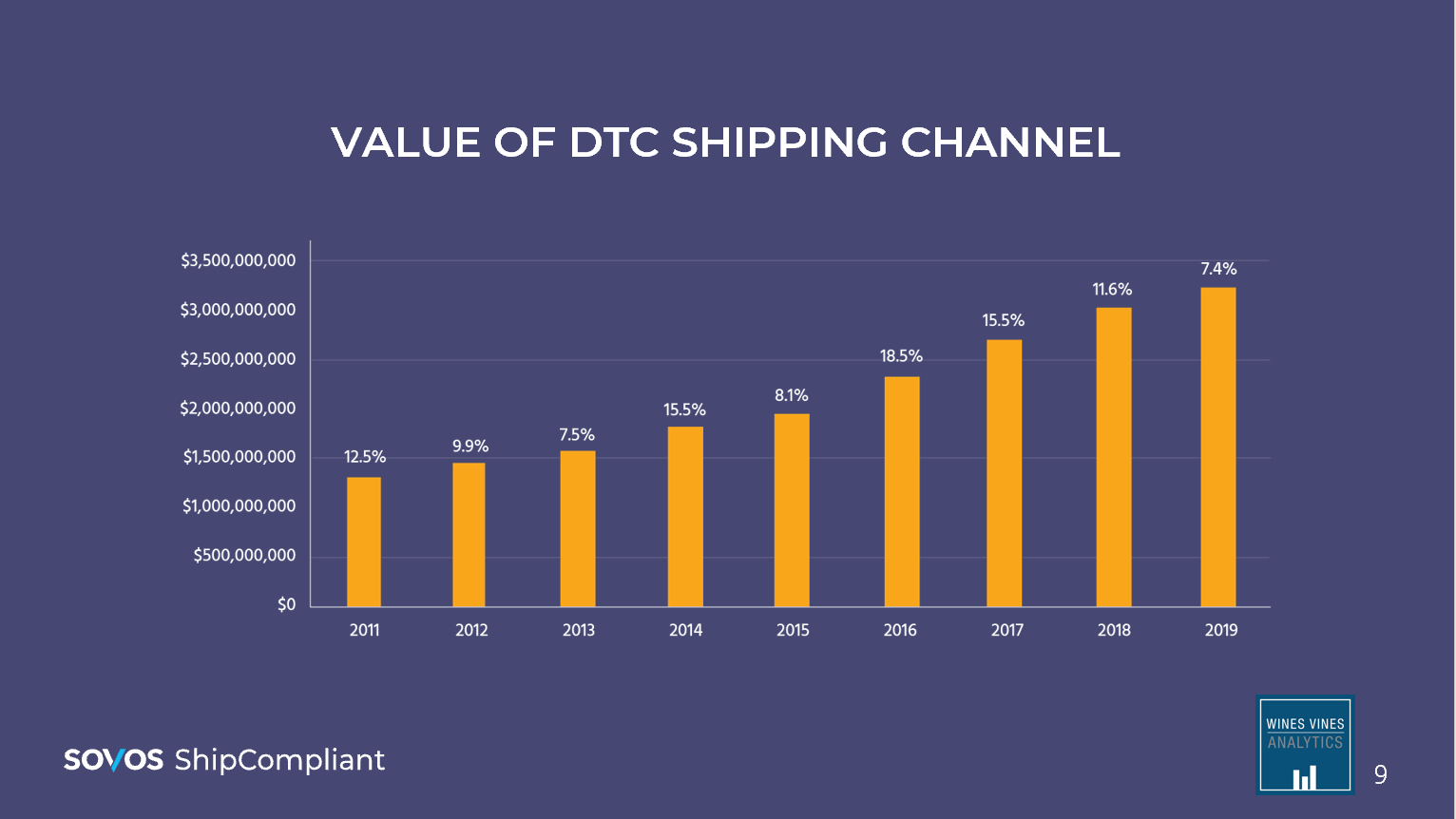
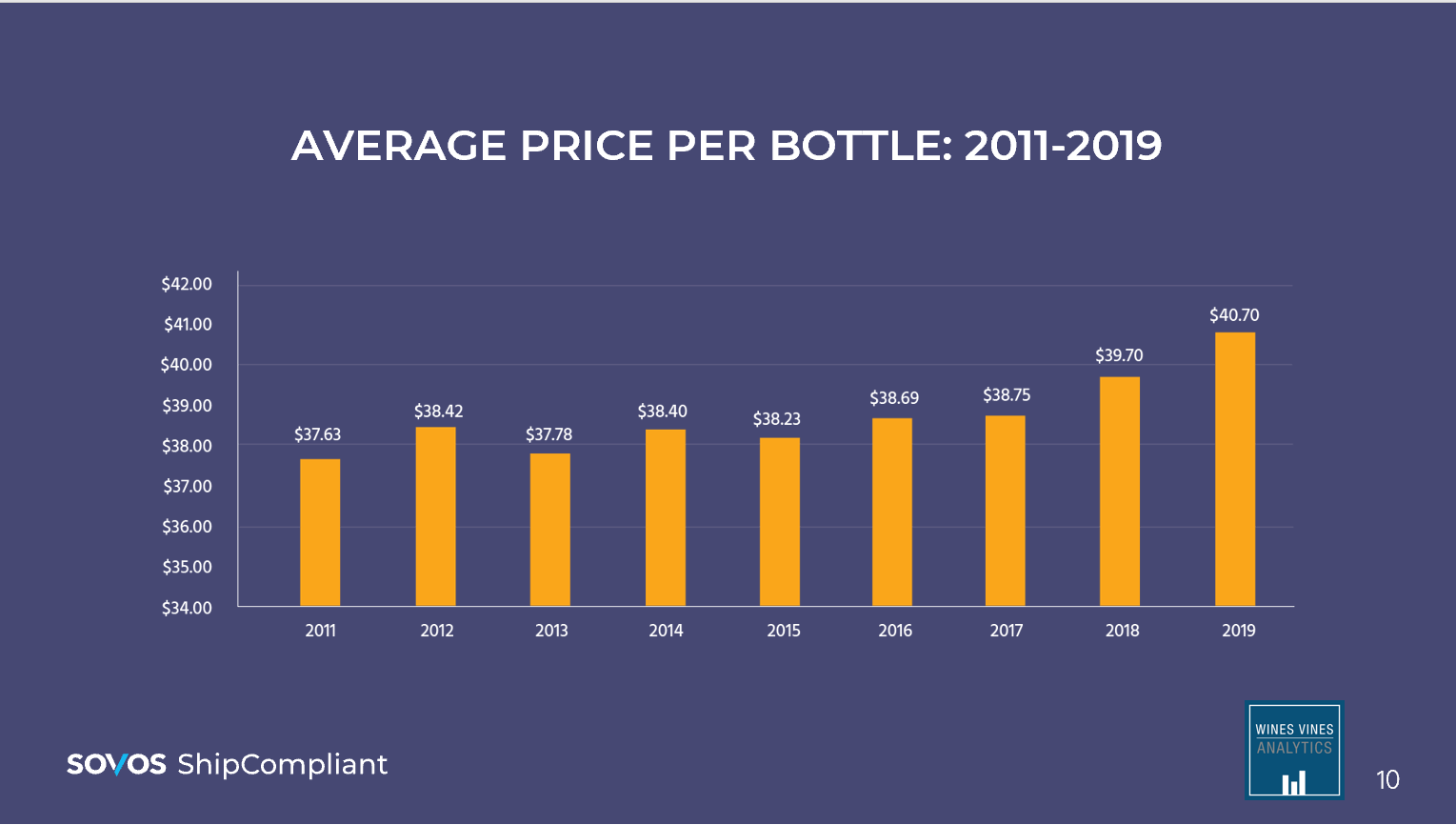
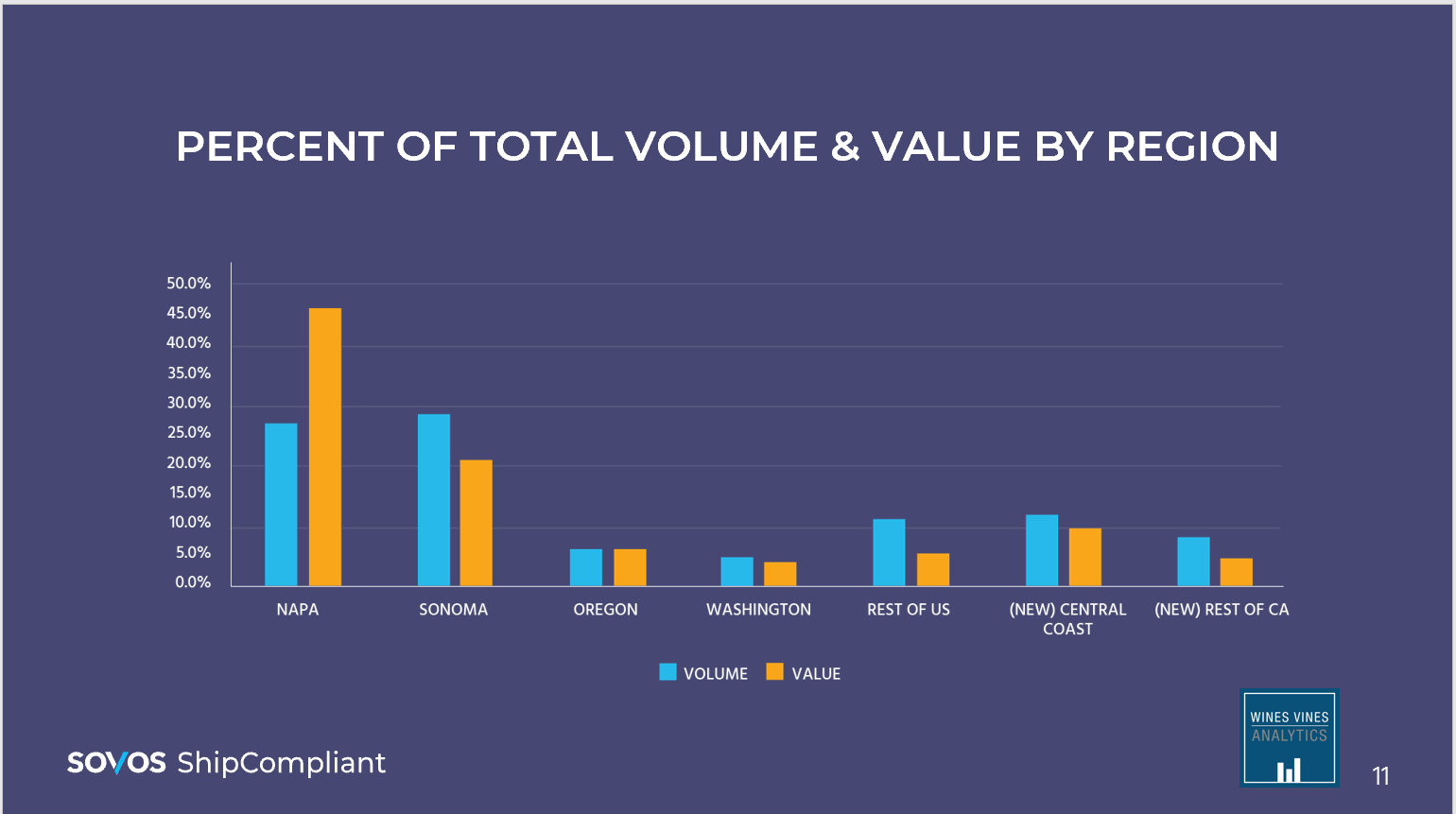
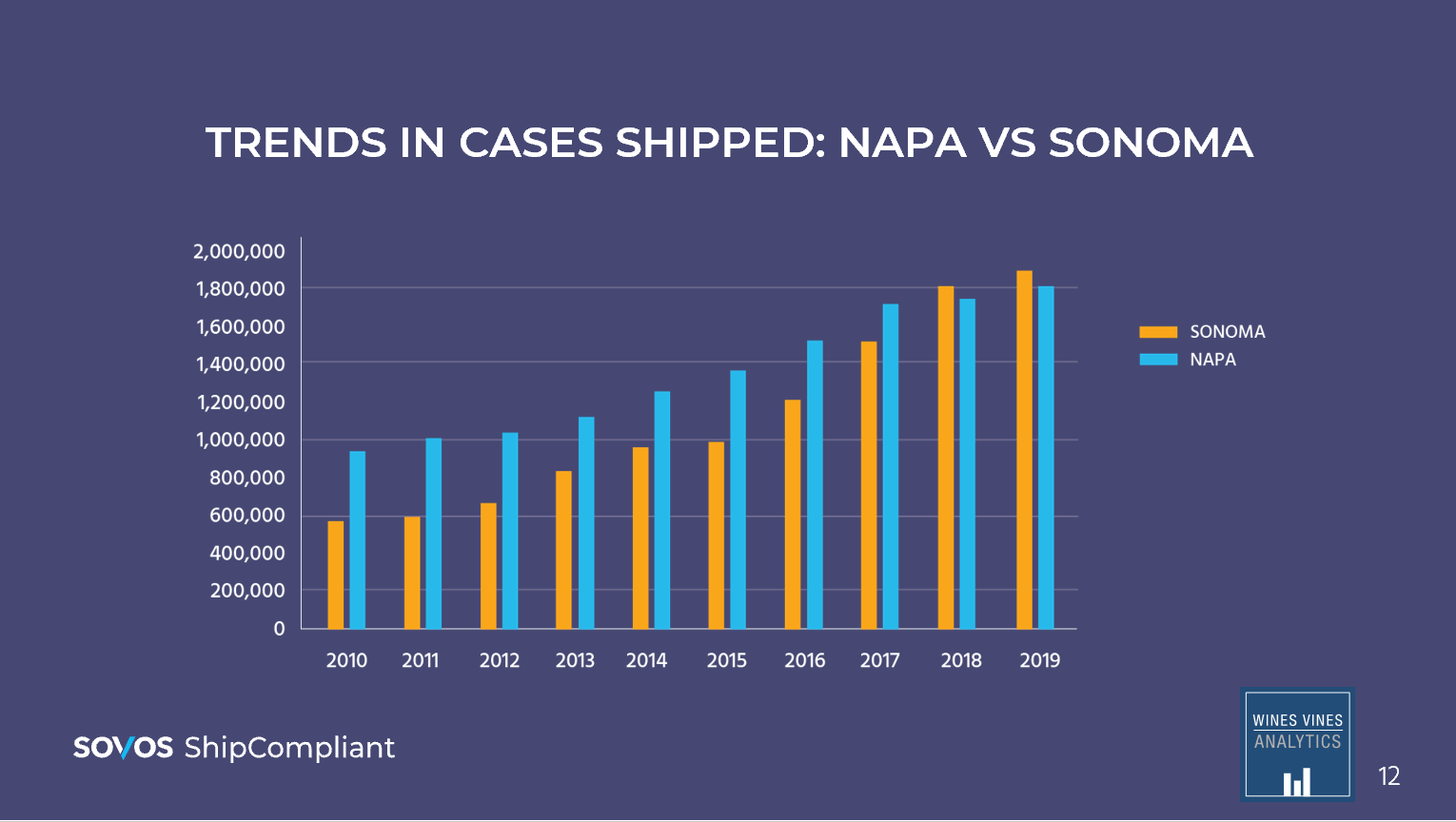

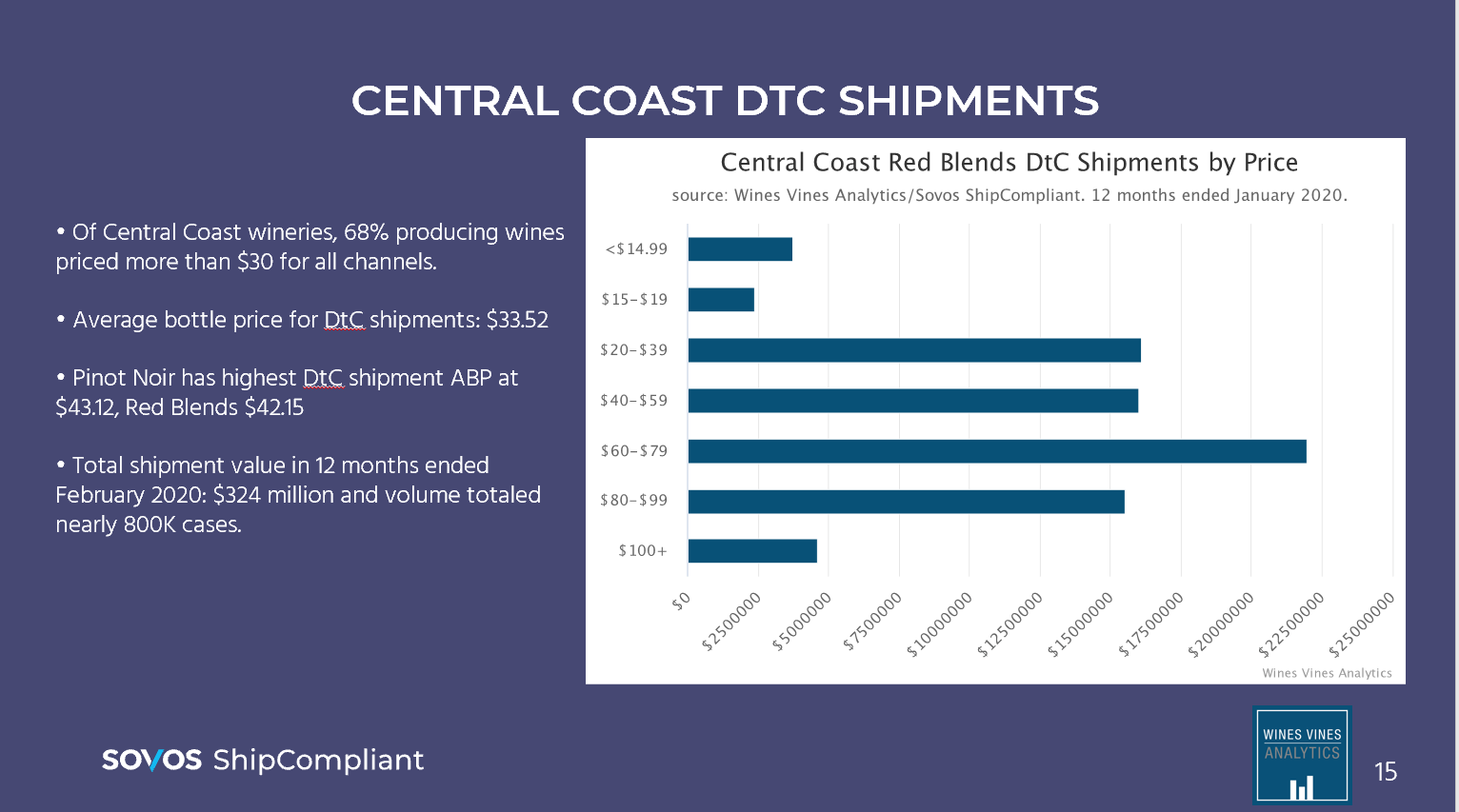

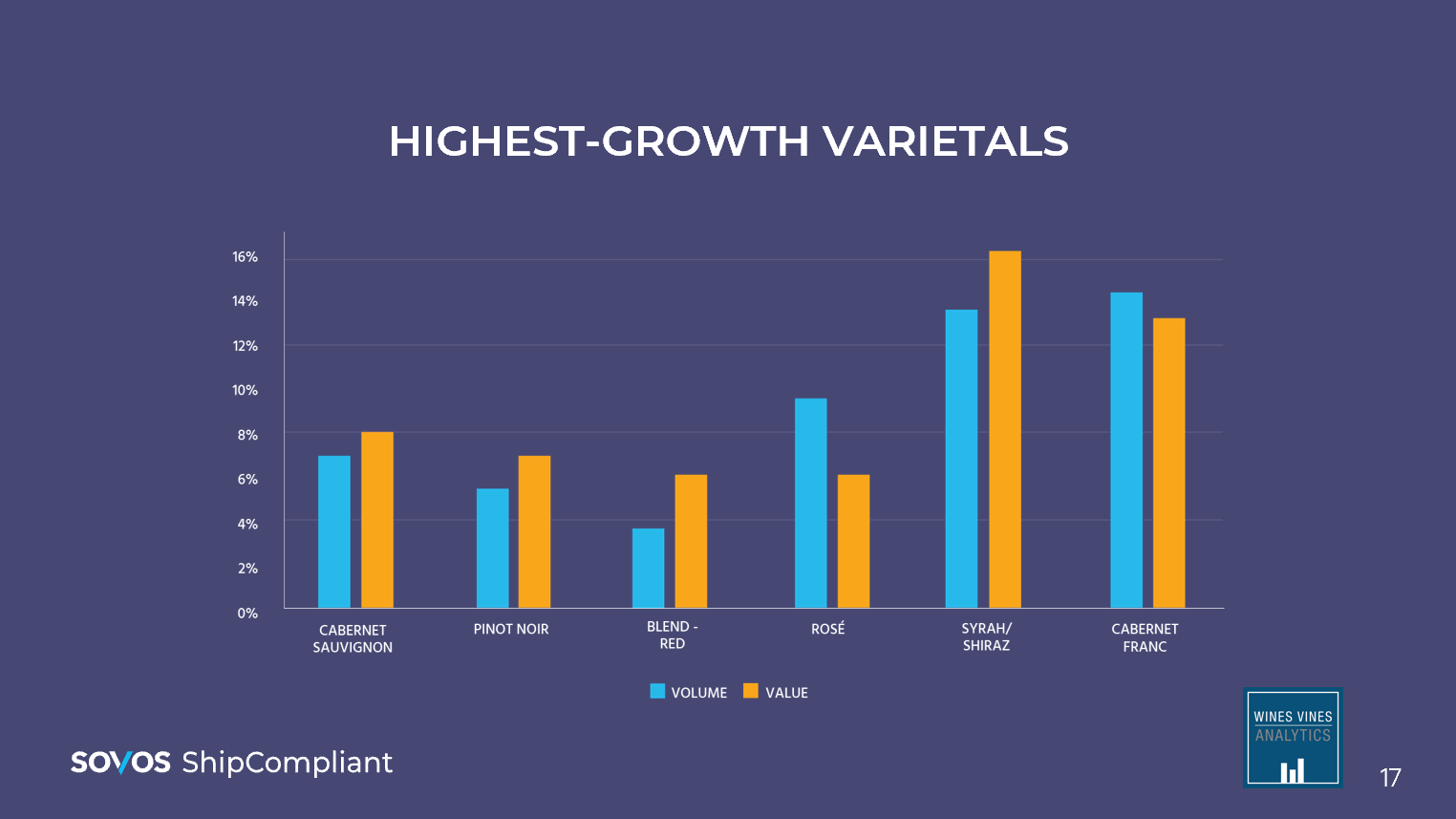

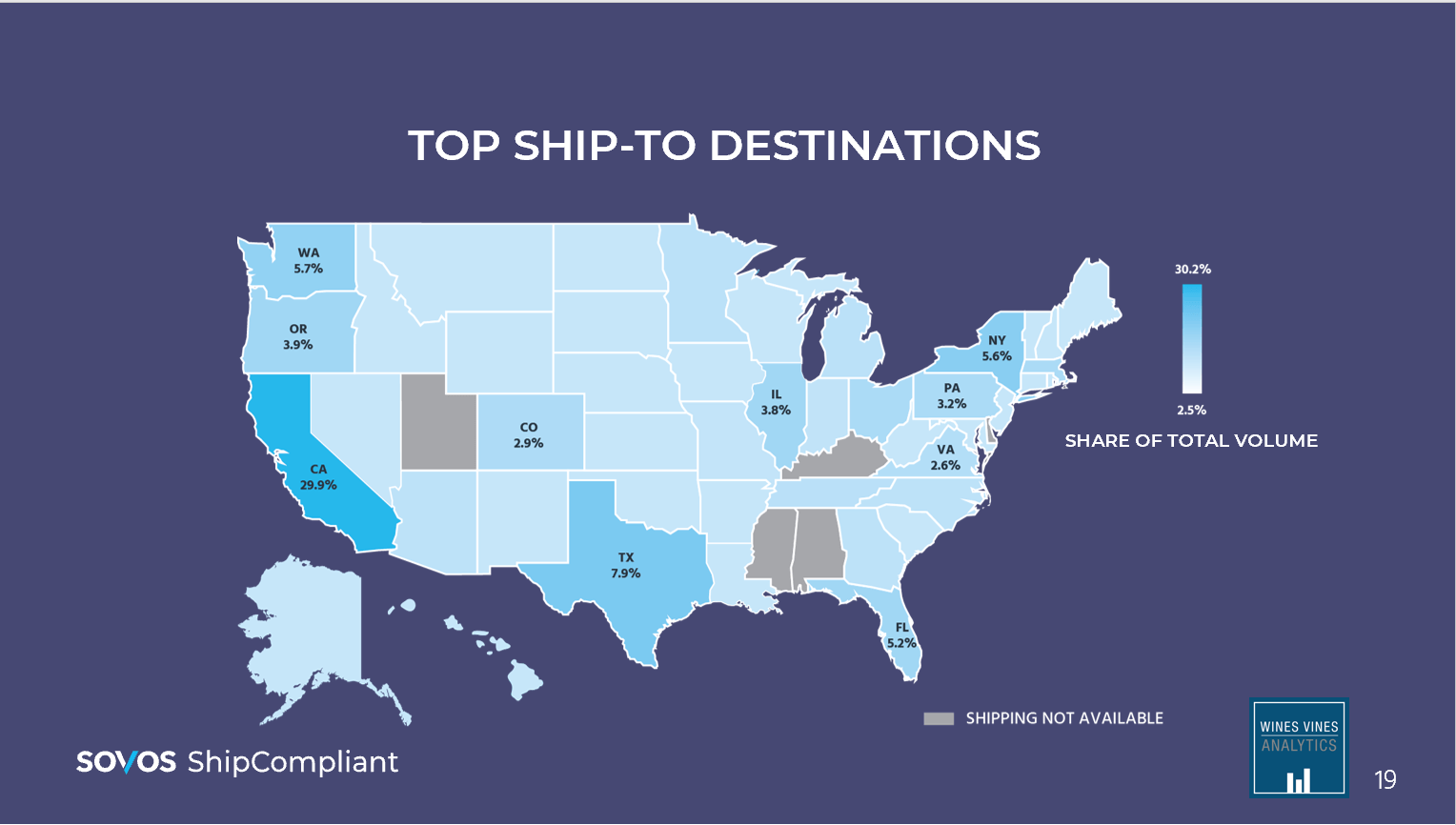
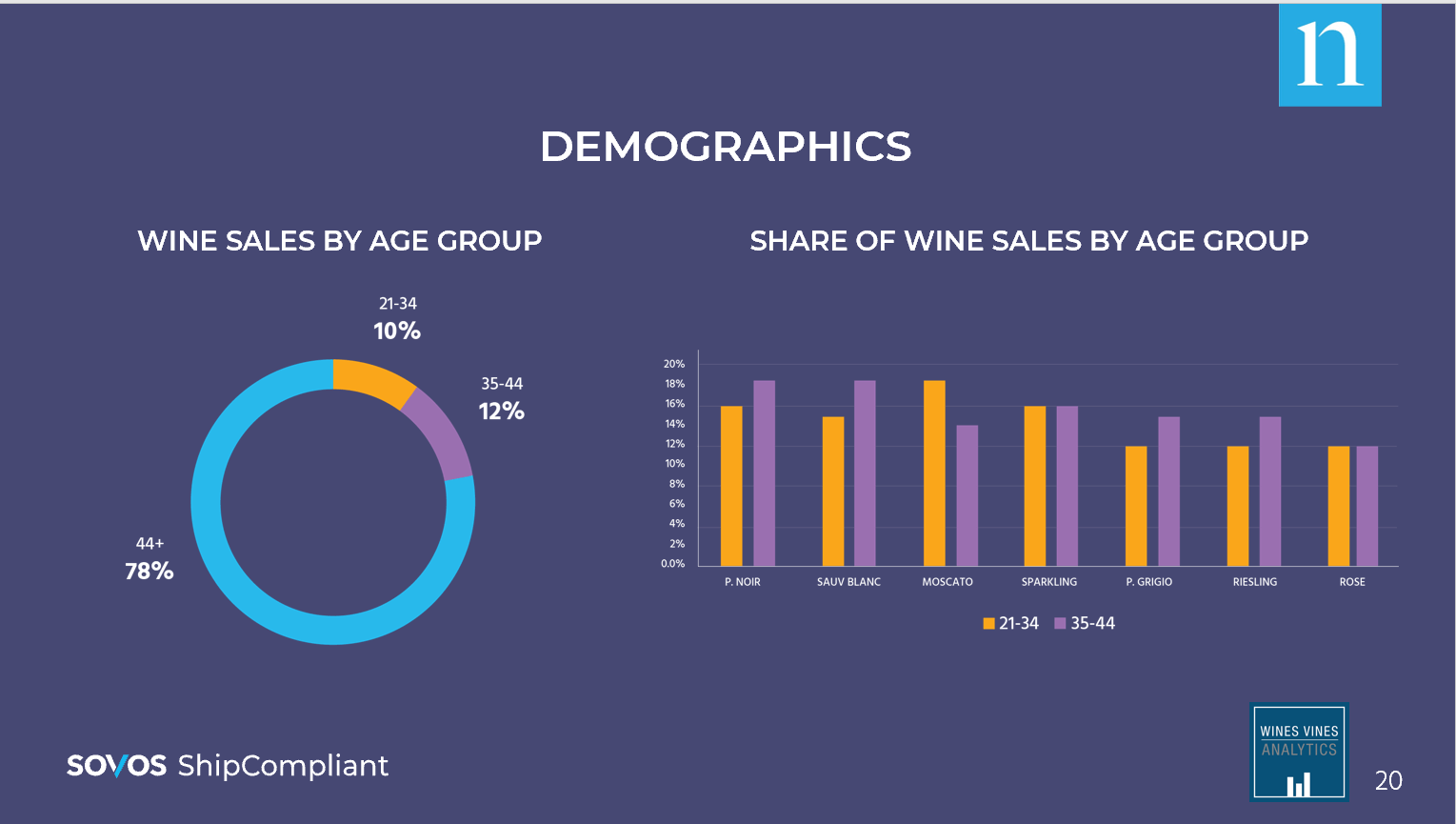
Watch the full webinar here, and send any questions to askshipcompliant@sovos.com, where we’ll round up the questions we receive and answer them in periodic blog posts.
It seems as if, in a few short weeks, the entire world has been turned upside down. In response to the coronavirus crisis, society has adopted emergency measures to stem the tide of the virus, with companies shifting to remote work or shuttering wholly, and people adjusting to social distancing or more extreme quarantine measures.
No sector of the economy has been unaffected by the crisis, though each faces unique challenges. For the beverage alcohol industry, the effects have ranged from the extreme to the manageable.
Every tier in the beverage alcohol industry has faced an impact from the crisis. Retailers have to contend with social distancing measures that prevent consumers from gathering in restaurants and bars, or even from entering a package store. Distributors are dealing with the general strain on delivery services, which means responding to both increased demand for remote fulfillment and considering the greater danger for their employees who cannot simply bunker up at home. Suppliers have had to shut down tasting rooms, experiencing a reduction in those sales, though, where available, direct-to-consumer (DtC) shipping can abate that; however they face a strain ensuring their employees, who are increasingly dealing with shelter in place orders, can even show up for work.
Thankfully, regulators and lawmakers have been responding, and acting to relieve pressure on the industry where they can. Many states have adopted temporary rules that remove restrictions on licensees making deliveries. New York and Colorado, for example, are permitting certain licensees, such as restaurants and brew pubs, to make deliveries of alcoholic beverages in closed containers when accompanied by a sale of food. Curbside sales for package stores have become commonplace. This is a boon for the licensees, who normally see a lot of their revenue from sales of alcohol, and for consumers, who can continue to enjoy a modicum of normal life.
The direct-to-consumer wine shipping market is well placed to support consumers looking to enjoy their favorite wines. As long as delivery services continue to operate—and we all owe an extreme amount of gratitude to all carriers and delivery workers these days—this market will continue to service the wine-loving community.
Another very welcome response has been the adoption of forbearance on tax filings. Most states have issued notices allowing for late filings and eliminating penalties and interest during this emergency period. While these policies affect a broad range of taxes, from personal income tax to sale taxes, many alcohol excise taxes have been affected as well. We at Sovos are tracking worldwide announcements, including those from alcohol regulatory agencies, and sharing them here.
While it is beneficial for regulators to be forgiving right now and relieve pressure on businesses dealing with more immediate harms, it should be remembered that regulators themselves are under pressure to avoid personal contact and many agencies have temporarily shut down. That means that response times for things such as licensing, label registrations, and general inquiries, may be severely reduced. Industry members should keep this in mind, and grant regulators the same leeway and understanding that they hope to receive from regulators.
These are uncertain times, with news seeming to change within an hour. What was unthinkable a few weeks ago is now mundane. But with patience and understanding, we can all work together to get through this and return to normalcy. In the meantime, we remain committed to tracking and sharing updates on how the compliance, tax and regulatory environment is evolving in this difficult time.
The coronavirus has moved from being a panic to a pandemic over the last few weeks, leading to mass closures and social distancing, and capturing all of our attention. The news is replete with stories of cancelled events and ways to cope with the reality of a modern plague. Heavily dependent on tourism and entertainment, the beverage alcohol industry has also been caught up with coronavirus news, with everyone trying to determine how best to respond to the crisis and mitigate damaging effects.
If you’re staying inside this week (and we hope you’re keeping safe!), we still have the Roundup for you. This week, a highly anticipated lawsuit regarding DtC shipping of wine by out-of-state retailers in Michigan was heard by the Sixth Circuit Court of Appeals. Then, how coronavirus is affecting the beverage alcohol industry, and predictions of an upcoming bourbon barrel shortage.
One of the main effects of the coronavirus scare is the cancellation of many prominent events. As such, we have decided to postpone our Beverage Alcohol Summit; but pay attention for future announcements including a makeup date when that has been set. Our annual Wine Summit is currently still scheduled for May 28 in Napa, though this is subject to change as the situation develops. To find more information on and register for the Wine Summit, look on our website.
And in case you haven’t heard, the 2020 Direct-to-Consumer Wine Shipping Report is available for download! Get your free copy of the report here.
Thanks for reading the Roundup this week. As ever, be sure to check out the rest of the Sovos ShipCompliant blog for regular updates, and we’ll see you again in another couple of weeks.
TTB Newsletter | This week’s top news includes COVID-19 related topics, as well as the publication of our 2019 annual report. TTB
Direct-to-Consumer Wine Shipments Debated at Sixth Circuit | Michigan argued before the Sixth Circuit on Thursday that a law preventing out-of-state wine merchants from making direct shipments to its residents does not violate the U.S. Constitution’s commerce clause. Court House News
Arizona Bill Would Eliminate Production Caps on Self Distribution | A state bill in Arizona seeks to spur the local wine industry by removing annual production caps imposed on wineries that self-distribute. Wine Business
Bill to Allow Shipment of Alcohol to Your Door Passes Through House Committee | House Bill 415, sponsored by Rep. Adam Koenig, would allow producers to ship wine, spirits, and beer to consumers. Kentucky Chamber
The Utah State Legislature Has Approved “Wine of the Month” Clubs (and Some Light Bootlegging) | A bill that allows wine subscriptions has passed the Utah State Legislature. FOX 13 SLC
Pandemic a Double-Edged Sword for Wine | It would be easy to take a dark view of wine’s various crises, but it’s not all doom and gloom. Wine-searcher.com
Gavin Newsom Calls for Closure of Tasting Rooms and Other “Non-Essential” Establishments | Gov. Gavin Newsom on Sunday called for the closure of tasting rooms and other “non-essential” establishments as part of a statewide effort to curb the spread of Covid-19. Wine Business
Selling Wine in a Pandemic | Your job as a winery is to figure out how you can get your consumers to realize you are open for business, and show them the options they have that will make it easy to get your wine to them – even during a pandemic. SVB on Wine
Coronavirus Has Whisky Lovers Facing Bans on Distillery Tours & Festivals | As the impact of the COVID-19 novel coronavirus pandemic spreads, more whisky events are being cancelled or postponed and the list of distilleries temporarily halting public tours and closing visitors centers is growing – with more expected in the coming days. Whisky Cast
The Annual SVB Direct to Consumer Survey is Open | The survey is now open and will close March 20th at which point SVB will contribute substantial time and resources to analyze the data, turning it into relevant information for the wine community. SVB on Wine
Is There a Bourbon Barrel Shortage on the Horizon? | We chatted with loggers, wood scientists, and mills to see if the supply of barrels can keep up with bourbon demand. The Daily Beast
Researchers Grapple With Grape Vine Disease | UC develops new varieties resistant to Pierce’s disease, but red blotch, other pests and viruses remain a concern. Western Farm Press
For the most up-to-date information on retailer DtC shipping rules, visit this page.
This post was updated on January 4, 2024.
In August 2017, Missouri repealed rules that previously permitted limited direct to consumer (DtC) sales of wine by licensed retailers. This rule change highlighted the complexities surrounding retailer DtC sales. This is the second installation of a three-part blog series to remove some of the confusion these complexities can cause. Today, we discuss where retailer DtC is still permitted, as well as the compliance requirements imposed on retailers making these sales.
As of latest publication date, 12 states and the District of Columbia permit out-of-state retailers to sell directly to their residents, and fulfill those orders through a common carrier. Twelve of these states, plus D.C., will allow shipping by retailers located in any other state, as long as they comply with the rules of the destination state; the other three operate under a “reciprocal” process, described below. Except for selling to residents of these twelve states and D.C., it is illegal for a retailer to deliver beverage alcohol into any state in which it does not have a physical off-premises retail store.
If they receive a license and comply with the rules under that license, out-of-state retailers may sell directly to customers in California, New Mexico Oregon, Wyoming, Nebraska, North Dakota, Louisiana, West Virginia, Virginia, New Hampshire, Florida, Connecticut and the District of Columbia. However, there are some quirks:
For these states, the licenses are generally the same as those required for manufacturers to ship DtC – though the price may vary, as is the case in Louisiana. The same restrictions imposed on suppliers will also apply to retailers. Without this license, retailers cannot legally sell to and make deliveries to residents of these states.
Wyoming, Louisiana, Connecticut, Florida and West Virginia permit the sale of wine only. Nebraska, North Dakota, D.C., and New Hampshire permit the sale of all types of beverage alcohol. Virginia permits the sale of beer as well as wine, as does Oregon. However, Oregon only allows beer to come from states that also permit Oregon breweries to deliver to their residents. For more on DtC beer sales, head here.
Retailers must also follow specific tax rules. Each of these states, except for D.C, require seller (i.e. the retailer) to collect and remit both excise taxes and state sales taxes. Neither Oregon nor New Hampshire have state sales taxes, but New Hampshire levies a special liquor tax that will apply. These states also require a regular report from the retailer detailing the DtC sales they have made – though in some states, this may be coupled with a tax return.
When the product is being delivered, it must be shipped in a properly labeled package indicating it contains alcohol and an adult’s signature is required for delivery to be made. Carriers experienced with the DtC market (primarily FedEx and UPS — USPS does not accept packages containing alcohol) are aware of these rules, and will collect signatures. These carriers will also ensure retailers have valid DtC licenses before agreeing to ship their packages.
There are also some individual state rules to note. West Virginia and New Hampshire have “dry” communities where it is illegal to sell alcohol in any manner, including by a DtC delivery. West Virginia and Virginia will require a DtC seller to indicate to the alcohol control boards which labels will be sold DtC. Virginia requires a retailer to post that they have permission from the manufacturer to resell their products through DtC, and also prohibits DtC sellers from using third-party marketing to advertise their DtC market.
These may seem like a long list of onerous rules that unfairly restrict retailers from participating in the DtC market. However, these are the same type of rules that wineries, the bulwark of the DtC market, have successfully complied with for years.
It may also seem unfair that the list of states that permit retailer DtC is so small. This, however, is a local political consideration. Each state is empowered to establish its own alcohol beverage rules, and many states have determined that it is not in their interests to permit out-of-state retailers to sell directly to their residents. Residents — and retailers — who oppose those restrictions can petition their state legislators to amend the rules.
Beyond the ten “license” states and D.C., there are currently two states that operate under what is known as “reciprocity” rules. These states are California and New Mexico, and they only permit shipments of wine. Missouri and Idaho used to be reciprocity states for retailers, but with rule changes they now prohibit all deliveries made by retailers both in-state and out-of-state.
Reciprocity is essentially an “I’ll scratch your back if you scratch my back” methodology. More technically, California and New Mexico law says that they will allow out-of-state retailers to sell directly to their residents only if those out-of-state retailers are in a state that allows out-of-state retailers to sell directly to their residents without any licensing, tax, or other regulatory burdens. Put more simply, the rules in state B must be as free and open for retailer DtC sales as the rules in state A for a retailer shipping from state B to sell to a resident of state A. They may also require a specific letter of agreement between the two states, indicating that there are no license or tax requirements.
In effect, since only California and New Mexico have such a rule in place, residents of California and New Mexico are limited to only receiving shipments from retailers located in California or New Mexico. Retailers in California and New Mexico can then freely sell to residents of those states – or, if they get licensed, sell to residents of the other ten states, plus D.C.
Because a lack of regulatory burdens is the crux of these reciprocity rules, from a compliance standpoint it can much easier for a retailer in one of these states to sell to residents of the others. However, obviously, their customer base will be limited.
Want to know everything about DtC shipping? Download the 2023 DtC Wine Shipping Report.
This month, Sovos ShipCompliant is set to release the 2020 Direct-to-Consumer (DtC) Wine Shipping Report with our partners Wines Vines Analytics, based on 2019 data. Soon after, we’ll be sponsoring and presenting an exclusive first look at the report during the Direct-to- Consumer Wine Symposium near the end of January.
Here is what you need to know about the report, along with some key findings from 2019 to keep in mind for the upcoming 2020 report and where the new DtC report findings will be showcased at forthcoming industry events.
The Direct-to-Consumer Wine Shipping report is a one-of-a-kind industry report, presenting data not tracked or reported anywhere else. Sovos ShipCompliant and Wines Vines Analytics have been collaborating since 2011 on the direct-to-consumer channel’s exclusive shipping report, with the 2020 report marking the tenth edition.This unique industry report gives detailed insights on wine shipments made from wineries to consumers in the United States.
The Wines Vines Analytics team created an algorithm that uses a database of nearly 10,000 U.S. wineries to extrapolate all DtC shipments from millions of anonymous transactions filtered through the Sovos ShipCompliant system in 2019. The model tracks sales by winery region, annual winery production, destination of shipments, wine type (varietal) and price points. The result is the most accurate projection of the American DtC shipping channel.
The 2019 report, covering 2018 data, shined a light on some new industry trends. Will this year’s report featuring 2019 data continue to reflect these trends, or will new growth and patterns emerge? Here are some of the top takeaways from last year’s report:
We’ll have updates on these and other findings in the 2020 DtC report. In the meantime, you can take a look at how the DtC channel performed in 2018 by checking out last year’s 2019 Direct-to-Consumer Wine Shipping Report.
Sovos ShipCompliant General Manager Larry Cormier will speak at the Direct-to-Consumer Wine Symposium on January 22 during the 9 to 10:30 A.M time slot. He will share highlights from the 2020 Direct-to-Consumer Wine Shipping Report and discuss how wineries can leverage the report’s data to increase their DtC sales in the months ahead. Learn which states are buying the most wine, which varietals and regions saw the most growth last year, and what you can expect from the channel this year.
Sovos ShipCompliant team members will also be at the Unified Wine & Grape Symposium in Sacramento, California February 4-6. The event is a perfect opportunity to learn new things through a variety of sessions, speakers and events, while networking with your peers. If you’re planning on attending, it’s also a great chance to further discuss the new report with our team. Stop by and chat with us, we’ll be at booth C1329.

ShipCompliant by Sovos will be at Colorado Brewers Guild Summit! A conference for independent Colorado craft brewers, by independent Colorado craft brewers. The Summit will focus on the most pressing needs of our craft beer community.
Come talk to us.
After months of waiting by the beverage alcohol industry, the United States Supreme Court published its ruling in Tennessee Wine & Spirits Retailers Ass’n v. Thomas on June 26, 2019. The 7-2 opinion, written by Justice Samuel Alito, clearly and definitively struck down a rule in Tennessee that required applicants for an off-premises retail liquor license to have been residents of the state for at least two years.
While in the moment this ruling is limited to the question of Tennessee’s residency requirement, by affirming the principle that states are limited in their ability to discriminate against out of state interests, it presents an opening to loosen other restrictive rules imposed by states.
The issue first arose a few years ago, when national retailer Total Wine Beer Spirits & More (Total Wine) asked the Tennessee Attorney General to opine on the constitutionality of the state’s two-year residency requirement for all applicants for in-state retail package stores. (Tennessee law also required a 10-year residency requirement for renewal applications, and required that all officers, directors, and owners of corporate entities meet the residency requirements; both of these provisions were overturned by lower courts, and were not at issue in the case before the Supreme Court.)
The Tennessee Attorney General found that the residency requirements were not enforceable, and Total Wine proceeded to apply for a retail package license; at the same time, a couple who had recently moved to Tennessee from Utah also applied for a retail package license relying on the same assurance that the residency requirement was invalid. However, the Tennessee Wine & Spirits Retailers Association threatened to sue the state’s liquor authority if it granted these licenses, leading to this case, which was designed to determine once and for all the constitutionality of the residency requirement.
The United States District Court for the Middle District of Tennessee, following the Supreme Court’s 2005 Granholm v. Heald ruling, found the residency requirement to be unconstitutional. This ruling was upheld on appeal at the 6th Circuit Court, leading to the challenge before the Supreme court.
The argument presented by Tennessee Wine & Spirits Association relied heavily on Section 2 of the 21st Amendment. This section provides great power to individual states to regulate their alcohol markets, and prohibits the transportation, importation, or possession of alcohol in a state that contravenes the state’s laws.
The opposing argument was based on what is called the “Dormant Commerce Clause,” which limits the ability of states to impose laws that limit interstate commerce or that set out discriminatory treatment of out-of-state interests in favor of in-state interests. (The doctrine is called the “Dormant” Commerce Clause, as it is not explicitly stated in the Constitution, but comes from the Commerce Clause, as set out in Article I, Section 8 of the Constitution, which enables Congress to regulate all interstate commerce. The implication, then, as worked out over nearly two centuries of Supreme Court rulings, is that states are prohibited from interfering in interstate commerce, unless explicitly permitted by Congress.)
The crux of the decision, then, fell on which provision of the Constitution had greater bearing: the 21st Amendment’s expansive grant of rights to the states to regulate their internal beverage alcohol market, or the Dormant Commerce Clause’s restriction on states’ ability to enforce discriminatory laws.
In his opinion, Justice Alito clearly sets out the position that Tennessee’s residency requirement is an improper discrimination against out-of-state interests, which is not saved by the powers granted to Tennessee under the 21st Amendment. As such it is unconstitutional, and fails on its face.
Alito justifies this reading by noting that Section 2 of the 21st Amendment has for decades — and increasingly so in more recent decades — been limited by other provisions of the Constitution. In various other cases, it has been found that limits on alcohol advertising improperly violate the First Amendment, or that discriminatory taxes that apply only to liquors produced out of state violate the Equal Protection Doctrine. As such, it is not at all improper to find that the Dormant Commerce Clause similarly can preempt a 21st Amendment claim.
Alito does not defang the 21st Amendment. He acknowledges that it does still provide states with the power to regulate their internal alcohol markets. However, he affirms the position that state laws that rely on the 21st Amendment must be based on the principles that the 21st Amendment was originally designed to enable: that states can “address the public health and safety effects of alcohol use and to serve other legitimate interests.” (Tennessee Wine & Spirits Retailers Ass’n v. Thomas, page 32.)
But the corollary then, is that purely protectionist measures that fail to show a connection to those interests must fail. Because Tennessee’s residency requirements are facially all about blocking the entry into the Tennessee market by out of state interests, and are not justified by concerns of public health and safety, they must fail.
Alito does address the claims by the petitioners that these rules are in fact tied to public health and safety concerns, but dismisses them as “implausible on its face” (page 33). Basically, the claim that the state needs to limit retail package store licenses to only parties that have resided in the state for at least two years cannot stand because the state can still require that there be an instate agent to be liable for any instate claim, or can require the out-of-state party to accept jurisdictional authority by Tennessee. (Alito also references the border town of Bristol, Tennessee, noting that it’s ridiculous to believe that a person in Memphis — 500 miles away — has more interest in the health and safety of the local community than a person residing across the street in Bristol, Virginia.)
As such, a state cannot merely claim that its laws relate to public health and safety, it must demonstrably prove that in court. However, left unsaid (and therefore likely ripe for future litigation), is what exactly are “other legitimate interests.” Seemingly, these should relate to public health and safety, and other principles of temperance, but there perhaps lies an opening for states to argue for the validity of other laws in the future.
Justice Alito was joined in his opinion by Chief Justice Roberts, and Justices Kagan, Ginsberg, Kavanaugh, Sotomayor, and Breyer. Justice Gorsuch wrote a dissent, which was joined by Justice Thomas.
Gorsuch’s dissent rebukes Alito’s opinion, stating that this ruling misinterprets the history of the pre-Prohibition era and the genesis of the 21st Amendment. Whereas Alito, and the majority of the Court, sees that history as limited to asserting the principles of public health and safety, Gorsuch takes a broader stance, finding that those principles enable states to impose all manner of laws (including residency requirements, which he notes themselves have a 150-year history). Essentially, this argument follows what many who support restrictive state rules claim: that states can impose any rules they want, “because alcohol”. They assert that since this is a dangerous and fraught product, states have free reign and it is improper for a court to second guess a state’s assertion that their laws are valid. (It should also be noted that Gorsuch and Thomas are notoriously critical of the Dormant Commerce Clause, and are apt to rule against any argument that relies on it.)
Presently, this ruling only applies to Tennessee’s durational residency requirements, meaning that, indeed, Total Wine and other people who have not lived in the state for two years can receive a license to operate a retail package store.
However, Alito’s ruling does seem to open the door for a more expansive view of 21st Amendment doctrine that requires a showing by states that their laws demonstrably address a concern related to public health and safety or other legitimate state interests. The Court has reaffirmed the stance it has taken in more recent beverage alcohol cases (such as Granholm, Bacchus Imports v. Dias (1984), or North Dakota v. United States (1990)) that the basic argument of “because alcohol” will not carry the day.
This has broad implications on the direct-to-consumer (DtC) shipping of alcohol by retailers. Producers have benefited greatly from the 2005 Granholm decision that determined that when states enable in-state wineries to make DtC shipments of wine, they must grant out-of-state wineries the same permission (by implication this would also apply to other producers, such as brewers and distillers). However, retailers have not been extended the same rights.
Currently, about a dozen states permit the DtC shipping of alcohol by retailers, for both instate and out-of-state retailers (Connecticut recently passed such a provision, coming into effect July 1, 2019). However, a few states have recently passed laws that would prohibit out-of-state retailers from making DtC shipments of alcohol, while enabling it for instate retailers (namely Michigan, Missouri, and Illinois).
The states claim that this is permitted, as Granholm should be limited solely to producers, and did not address the rights of retailers. But Alito’s opinion seems to shift the landscape for these arguments, requiring that states put forth a clear argument that such facially discriminatory rules are based on the principle of upholding public health and safety. Following that direction, it is likely that the courts will have to rule against the states in the active court cases. And going forward, as more states move to expand DtC permissions for retailers, they will have to grant the same permissions to out-of-state retailers.
As Alito notes in his opinion (citing Granholm), “[i]n this age of split-second communications by means of computer networks . . . there is no shortage of less burdensome, yet still suitable, options” for states to monitor and control their beverage alcohol markets. By checking licenses, tracking orders, and providing tax calculation and reporting for the DtC wine shipping market, ShipCompliant by Sovos has been on the leading edge of this market, enabling our users to comply with the various states’ DtC regulations. Through our services, our users have been able to stay in good standing with state agencies, and states have received tens of millions in tax revenue.
We are therefore heartened to see the Court expand on the principle that states are limited in their ability to discriminate against out of state interests, despite the seemingly expansive nature of the 21st Amendment. By expanding the market, and not relying on discriminatory rules, states can enable greater consumer choice and empower businesses to succeed, and they can do so while ensuring the safety and health of the people they aim to protect.
Request a demo of ShipCompliant, or discover how ShipCompliant gives wineries control over DtC compliance.
Beginning July 1, 2019, Connecticut will become the latest state to permit the direct-to-consumer (DtC) shipping of wine by out-of-state retailers.
Governor Ned Lamont signed SB 647 on June 5. The new law amended many provisions of the state’s alcohol statutes, including the current rules for wineries’ DtC shipments of wine, which now include language opening the state to DtC shipping of wine by retailers.
Retailers looking to make DtC shipments of wine to Connecticut consumers will have to comply with the same regulations that have long applied to wineries. These include:
With the passage of SB 647, Connecticut joins the small, but growing, ranks of states that permit out-of-state retailers to make shipments of wine direct to consumers. Currently, the other states are: Alaska, Louisiana, Nebraska, Nevada, New Hampshire, North Dakota, Oregon, Virginia, West Virginia, and Wyoming. (California, New Mexico, and Idaho also permit retailers in each others’ states to ship to their residents.)
The opening of another state to DtC shipping is part of a positive trend. By establishing rules and regulations for how retailers can join into the Connecticut DtC market, the state is enabling itself to effectively monitor, tax, and police that market. This, in turn, means the residents of Connecticut can legally access a national selection of wines that might otherwise not be made available locally.
In addition to SB 647, the governor signed HB 7427, the state’s budget. This bill includes a 10 percent increase on Connecticut’s excise taxes on wine and spirits, which will become effective October 1, 2019. Thereafter, the taxes on alcohol in the state will be as follows:
Request a demo of ShipCompliant, or discover how ShipCompliant by Sovos gives wineries control over DtC compliance and reporting.
Recently, the Sovos company, ShipCompliant had their annual report highlighted in the Washington Post. As the article points out, “The very existence of a firm such as ShipCompliant highlights the difficulties of direct shipping. Forty-three states allow it in some form or other, up from 17 in 1998, but state laws and regulations differ, creating paperwork and financial headaches for wineries seeking to use this sales channel.” To read more about the complexities surrounding shipping alcohol across state lines and how we can help, please click here for the full text of the article.